11 November 2022

Social media content warnings

Capturing a 2018 Twitter thread of mine reflecting on the user experience design of content warnings:

I write this in the hope that mental health pros, trauma survivor advocates, and UX designers have comments which will help refine these ideas.

I think I think that social media content warnings should be conceived in assistive technology terms, comparable to image descriptions:

  • easy for everyone to include on every post
  • unobtrusive for ordinary readers
  • powerful, flexible controls for readers who need them

Further, on many platforms one may need granularity in identifying what part of a post requires a warning: the post itself? an image within it? a link from it?

My original post was inspired by having used a content warning when I shared a story on Twitter and feeling that I had no choice but to do it awkwardly. The warning was a spoiler … and it seemed to me that delivering the warning was itself potentially triggering for people with trauma. I wished I had better tools.

Readers with trauma triggers need at least a few possible settings for how they see posts with a content warning:

  • Completely conceal all posts with this CW
  • Show only the CW, with an option to open the post if I wish
  • Show a short header for the post and the CW, with an option to open the post if I wish
  • Show the whole post but have the CW as a header, to eliminate surprise

These should not be global settings; readers may want different content to behave differently. People with trauma triggers only need to have flag & filter behaviors happen for the particular things which affect them. They may want more or less protective behavior for different content. This helps keep the handling of necessary triggers from becoming a burden of friction which makes everything a nuisance to read.

In order to enable this, we would need a strong standardized taxonomy of triggers. There might be a few dozen major common triggers, plus an open-ended ability to add more specific triggers. This should be a shared resource across multiple social media platforms, so that readers would only need to identify their triggers once and have them inherited across every platform they use.

To support a structured taxonomy of content warnings, social media platforms would need both crowdsourcing tools and professional information architects. Crowdsourcing is necessary to address the breadth of CW needs, to keep track of how various communities have evolving standards and understandings around trauma and other issues which make CWs important. And crowdsourcing tools can be abused by bad actors, making professional moderation necessary. Plus wholly crowdsourced taxonomies get hopelessly messy; professionals can keep the label system tidy and smart, doing stuff like linking CW-spousal abuse, CW-IPV, CW-DV, et cetera.

Crowdsourcing should extends to letting readers tag social media posts with content warning tags when the authors have neglected to do so, but this is tricky. It invites malicious brigading abusing this tool to harass and silence people.

Reflecting on how crowdsourcing content warnings can be abused — indeed, how even a system which is vigorously professionally managed can be abused — leads to hard questions about building trust network architectures which we need to think about better in social media more generally. Whose tags should be applied? Whose discounted? How do we ensure that the infrastructure is a democratically-accountable public utility?

Which in turn takes us to hard questions about user verification.

All of this demonstrates the broader challenge of social media platforms neglecting their responsibility to police how they are used … while many critics are dangerously naïve in imagining that this would be simple for them to do.

More content warning lore from Twitter

DoesTheDogDie.com indexes a very specific content warning for a huge library of movies and other media.

Jen <@booksherpa> offers an analogy which is particularly thoughtful about the relation between different kinds and degrees of triggers.

Imagine that you have been invited to a cake potluck. You bake a beautiful vanilla cake with chocolate icing, and, following the instructions in the invitation, send a copy of the recipe to your host. The day comes and you arrive, cake in hand.

The host hands you a number printed on an index card and directs you to a large table where all the cakes are. You place your cake down, the number next to it. The co-host hands you several folded pieces of paper stapled together.

“Here’s a list of all the cakes and their recipes by number,” they say. “If you’re okay with being surprised, feel free to ignore the list. If you want or need to know what cake you’re eating, or what ingredients are in it, look at the list.”

You just had dental work yesterday, and know you can’t have anything with caramel, so you look at the list and cross out three cakes. Next time you’ll get to have caramel!

Your friend Vanessa walks up to you, and you see her list has one cake crossed out. She sees you looking and says “Oh yeah, it has raspberry. I hate raspberry!” Another friend, Jeremy, joins you. His list has half the cakes crossed out.

Jeremy says “I can’t eat any of the ones with tree nuts, I’m allergic. But I’m able to come because of how they set up the party. I get to take my slices first, so there’s no cross contamination. Otherwise I couldn’t have come at all.”

“Speaking of that,” you say, “where’s Cat?”

“Oh, her allergies are bad enough so that they couldn’t come at all. She's sad, but after she reviewed the recipes, that was safest for her.” Just then the host rings a bell. “That’s my cue,” says Jeremy. “Time for cake!”

Luckily this party had a gracious host who set things up so everyone could make the best choice for their own safety and preferences. Others’ choices don’t affect yours. Yours don’t affect others’.

Now, imagine the handout from the host is a list of content warnings for a tv show. Some people can ignore it entirely. Some need it today for certain content, but may be okay to encounter that content another time.

Some prefer to avoid certain content. Some have to avoid parts of the content to stay safe. Some can’t engage with the content at all. Everyone uses the content warnings as they choose to make the best choice for their own safety and preferences.

Seems pretty simple when you look at that way.

Crap. Now I want cake.

Tatiana Mac <@TatianaTMac> has some ideas analagous to mine for watching streaming video.

Watching Squid Game, I imagined a UI that cued content warnings. The brief cues at the beginning of each episode are helpful, but could be supported with a subtle pop-up right before the event to Skip if you’re activated by it. Showrunners could indicate where these should happen and whether there are plot points that need to be summarised (via text or voiceover!)

(From my experience / by my count most triggers aren’t critical to plot and tend to be unnecessary devices, an issue for another time.)

CW: suicide

Extending this onto the platform, I could imagine setting a global choice on my streaming service that says say, “for all references to suicide, please:

  • skip without warning
  • skip with warning
  • more things I’m not thinking of

I skip a lot of shows due to

  1. references to suicide, often graphic,
    and on a different axis,
  2. strobes or motion, which make me sick.

Both are used abundantly and often without much care, making me wonder if sensitivity viewers are employed as much as I wish.

The thing that is disappointing about this is that adding this accessibility feature I suggested takes absolutely nothing away from the unaware majority. I’m sure they could use it to avoid content they find “annoying,” even, and it would be built for them.

The sad thing is perhaps that this isn’t seen as a money making feature (well except for companies who charge for accessibility features, which is shitty), so if would be hard pressed to be built. 🤷🏼‍♀️

And another gross sad thing is that they could track how many people skip activating/triggering topics and the results might be different than they thought!

(Yes I do hate myself for how effectively I can make a “business case” for things like this. 🥲)

CW: suicide

Anyway. This isn’t a critique of Squid Game (which I loved!) but media tech; it was what I was watching when I thought of this. I watched waiting for the suicide, then strobes, which kept me tense and scared for what I might see and how I might be impacted.

Payton Jones <@paytonjjones> offers some informed skepticism about whether content warnings as we do them now do what we want them to do.

We just released a meta-analysis on the efficacy of trigger warnings, content warnings, and content notes (preprint). Here’s a short thread explaining the results with graphs and figures.

There are a lot of fundamental disagreements about what it even means for a trigger warning to “work” properly. One common argument is that trigger warnings help prep individuals to brace themselves to face their triggers. e.g.,

New York Times: Why I Use Trigger Warnings
They don’t coddle. They help create a better environment for learning.

On this aspect, trigger warnings clearly fail. Studies consistently show a near-zero effect, with trigger warnings making no meaningful difference on “response affect” to potentially triggering material. Notice that even the most extreme point doesn’t reach a medium effect.

Another common argument is that warnings help individuals to avoid particularly triggering material altogether. Confusingly, both advocates and critics of warnings think that more avoidance supports their position.

Advocates: “Warnings help people avoid unnecessary emotional pain”

Critics: “Warnings prevent people from engaging with challenging material that would ultimately benefit them”

Well, too bad for all y’all. Trigger warnings do not seem to encourage avoidance. If anything, there are some hints they might attract people to stimuli in certain specific cases.

In studies with a choice between Stimulus A (warning) or Stimulus B (without a warning) - people seem drawn to Stimulus A. This effect seems more pronounced among those with more PTSD symptoms.

A third argument is that trigger warnings might be either beneficial or detrimental to educational goals. A handful of studies have looked at how well people absorb educational material with or without warnings. By now, you know the story. No effect of trigger warnings.

Finally there is just one aspect on which trigger warnings do have a consistent effect. They cause people to feel more anxious after receiving the warning, but before actually seeing the thing they were warned about.

(Of course, as mentioned before, once they see the actual stimulus, they respond just like they would without the warning. No difference.)

To conclude, I’ll give my own personal answer to the perennial question: should I use trigger warnings? Trigger warnings are not a calamity. They are not the end of the world. They have very little effect either way. So why not use them?

Imagine you had a doctor, and that doctor prescribed a medication. You ask him whether that medication is effective. He answers: “Oh no! It definitely won’t help. There's a small chance it could cause some minor harm, though.”

You’d probably question why the doctor prescribed the medication (you’d also probably switch doctors). Similarly, given the evidence, I question why one should want to use trigger warnings so badly?

I’m concerned about trigger warnings’ rapid spread, despite a complete lack of evidence that they help. I’m concerned that trigger warnings are taking up too much of the conversation, when we should be talking about things that matter much more.

Trigger Warnings Are Effective (at Generating Division, and Not Much Else)

We should be talking about how to encourage people to access evidence-based care for PTSD such as prolonged exposure therapy and cognitive processing therapy.

We should be talking about why PTSD is on the rise despite interpersonal violence (the primary cause of PTSD) consistently declining. And we should be talking about why people are more vulnerable to harm than ever before.

The Neurotic Treadmill: Decreasing Adversity, Increasing Vulnerability?

A Meta-Analysis of the Effects of Trigger Warnings, Content Warnings, and Content Notes

10 November 2022

My secret Star Trek story

Between the Hollywood hype machine and fans’ enthusiasm, the best stories about making the various Star Trek TV series and movies are well known, often even to non-fans. But I happen to have been lucky enough to be in the room when one particular little-known story was first told properly. I finally had an itch to tell the story on Twitter, where it got a lot of love, so with the Recent Unpleasantness I thought I should paste it in here.

As a Los Angeles teenager in the 1980s I paid to attend a talk by Nicholas Meyer & Harve Bennett, because I was nerd enough to know that Meyer had directed The Wrath Of Khan, which Bennett had produced before going on to produce and also write The Search For Spock. (Meyer would laster return to write & direct The Undiscovered Country, but that was still years in the future.)

They told great odd inside baseball stories. How they had carpeted the set for the bridge of the USS Excelsior and were astonished to have finally solved sound recording problems which had plagued the the Enterprise bridge. The details of the snafu which put spoilers in the TV ads for Search For Spock. Nerd stuff.

Harve Bennett said a thing about William Shatner which has stuck with me as part of thinking about film actors. Shatner was a better actor than his detractors say, but Bennett admitted that Shatner's real strong suit was something else, something more rare. He was a born movie star.

Meyer replied with a comment he has made in public many times since. He found that the secret to directing Shatner was to wear him out a bit with lots of takes. Shatner would get bored, and when he got bored it would make him become more subtle and interesting. For example, Meyer said, in the prefix code scene in Khan, Shatner could not resist a funny, hammy line reading at the climax: “Heeeere it comes!” A dozen takes later, he had the terrific — and much funnier — dry delivery of that line which went in the movie.


Bennett picked up that point to say that on the set for The Search For Spock — which Leonard Nimoy had directed — that Nimoy seemed to know something about getting good performances out of Shatner. He pointed to the scene where Kirk learns that Kruge kills Dr. David Marcus — “you Klingon bastard, you killed my son” — and said that Shatner’s first take had been hokey and terrible. Wreck-the-movie level bad. So Nimoy, says Bennett, goes up to Shatner and looks him in the eye and says just a few words. Then he steps behind the camera, they shoot the scene again, and Shatner is incredible. When he gets the word about David’s death, he looks like he got punched hard in the chest. Boom. Cut and print!


Meyer is amazed by this story, and asks what the heck Nimoy had said. Bennett says he desperately wishes he knew. It took maybe fifteen seconds for him to say it. What could it possibly have been? A mystery.

They tell some more stories. And then a tech for the venue comes up and whispers something in Meyer’s ear, and he says to us, “He said he might drop by and we didn’t think he would really have time. But … Leonard Nimoy is in the house.”

Whoa.

Nimoy takes the stage and since this is not a fan convention — we are cinephiles, the refined, erudite nerdcool nerds who came to see not actors but rather writer / producer / director guys talk shop — we keep it chill and hold our standing ovation down to a tasteful forty-five seconds.

Nimoy does a bit of his Charming Nimoy thing but, again, this is more a Hollywood industry event so he quickly turns to talking nuts-and-bolts about directing The Search For Spock as a lucky way to get in to directing feature films, since it meant he got to work with material and actors he understood so well. “Like for example, the first take we did of this scene didn’t work at all. I was really worried. It was the scene where Kirk gets the news that the Klingons have murdered his son.”

Nimoy does not see it but all of us in the audence do: Harve Bennett has this look on his face like he is going to burst into flames.

Nimoy tells us, “So I go up to Shatner and I say something to him I think this group will understand. ‘Bill, this is the only time I will ever give you this direction. This time? Take it as far as you can.’”

Magic.

Physical education

Thinking about how to rescue things I posted to Twitter given its ongoing implosion, I should capture that one of my most popular tweets was this:

I have bottomless rage at having been forced to spend about a thousand hours of my life in “physical education” classes that did not teach me how to stretch, train, or even lift a heavy box properly but did teach me to hate exercise

It got thousands of ♥︎s and re-tweets, and numerous heartbreaking replies. It was inspired by this thread:

PE teachers can wreck your health. Dr Anne Elliott found that bad experiences in school PE actively deterred people from taking exercise in later life & led to a state of alienation from their own bodies:


A multi-method investigation into physical activity in middle-age through a lifecourse perspective

There was a crew of savvy girls who knew the exact spot where you could break off the cross country course, nip over into the graveyard for a fag, then rejoin the course further along on the other side. One of them — Alison F, God love her — even showed me the proper technique for hiding matches under the bra strap in such a way that they did not rattle & give the game away. Not something I ever had occasion to use but I appreciated the confidence.

Anyway, though catharsis is satisfying, I think the important point of Dr Elliott’s research is that people who suffered corporeal disassociation as a result of school PE can still be helped to enjoy exercise in later life through bespoke training.

Lots of you in the same situation it seems. This is the least isolated I’ve felt all lockdown

[⋯]

Also, this excellent documentary is still up. Don't know if people outside the UK can listen to it but I'm sure there are ways and means

If you want to jump straight to the relevant research by @DrAnneElliott then head to 9 minutes 24 seconds in. (The whole documentary is well worth your time, though)

BBC — PE — A History Of Violence

This comment from LEX <@LexTheQueer> stands out as a perfect encapsulation of the cultural politics.

PE taught me that my boundaries, wants, needs, and experiences around physical activity didn’t matter. My “no” didn’t matter, so I stopped bringing my equipment so I had to sit out.

Many more underlined how cruelty from classmates in PE classes was not just a byproduct of the class as a forum, but implicitly (or even explicitly) encouraged by the adults responsible to the kids in their care, like chandra🐀 <@chandradawn1>:

I developed large breasts in the 9th grade. It was uncomfortable to run, do pushups, be in front of other kids. Half stared, half called me a whore based on breast size alone. Teachers were willing fail me for not participating, but none were willing to tell my classmates to stfu

People talked about being taught bad practices by cruel methods, like in this from george smiley’s man titties <@holodeckfreud>:

when i was a kid (like ages 5 to 8) i took ballet and gymnastics classes and was told that the stretching was supposed to hurt. i was often in tears by the end of stretching. years later, i complained to my mom that all the stretching we were doing together was making me achey

she explained to me that it was actually dangerous and bad for you to stretch until you were in extreme pain. who knew

for a little explanation: i am unusually inflexible and always have been, same with my mom. i’m like the opposite of double jointed. what’s a light pleasant stretch for most people is excruciating for me. this is why i wasn’t believed by ballet and gymnastics teacher i think

And since we are here, I also want to capture this related Twitter thread from I 💙 Yami Bakuri <@SuikaShoujo>:

Ooooh boy do I have some Thoughts™ on PE classes

I should start off by pointing out that I grew up in Illinois, where you are required by law to be in some sort of PE class every single semester, kindergarten through your final year of high school. I had other, more useful classes I never got to take because I had to be in gym.

In elementary-middle school (my school was small and k-8, so there were only 2 PE teachers, and they worked as a pair) I didn't *love* it, but thanks to the size of my class, the teachers knew me, and were shockingly accommodating in certain cases.

The big reward they used to make us behave was the possibility of a “Game Day,” which in theory meant the class would pick 3 games, then vote on which one to play, but in practice it was just picking between 3 slightly different versions of dodgeball with foam balls.

This may shock people, but I was, uh, not a fan of dodgeball. I was either targeted so I could be laughed at (during some of the worse periods of bullying), or ignored entirely, so I usually just stood in the back and waited for the crowd to thin out.

It got to the point where I would “forget” my PE uniform at home and take the loss in points, because you weren’t allowed to participate in the class if you weren’t dressed for it. Spent a lot of time brainstorming fic ideas like that in 8th grade, lol.

The main teacher was fairly understanding about my complete lack of athletic ability, and as long as I put in visible effort the majority of the time, there were a few times where I straight up got out of participating despite being dressed. I cried my way out of the mile once.

The absolute worst part was the Presidential Fitness Test, though. They didn't even really prepare us for it between the endless dodgeball games, we were just expected to be able to do an obscene amount of push-ups and run really fast.

I was (and am still not) athletic. At all. In any sense of the word. It didn't matter how much effort I put into those tests, they were physically impossible for me.

But they weren’t judging based on effort. They were judging on results. And guess what! Those results were factored into our final grade for the class! You can’t hold your entire body weight up with bent arms while hanging from a bar for an extended amount of time? Enjoy your F!

Even that wouldn’t be so bad if we didn’t have to do these tests while the entire grade was watching. Because that's what the preteen girl who is consistently teased for her weight needs, is to show off how out of shape she is. Apparently.

And that was just in middle school. High school somehow took every issue I had previously had with PE classes and made them worse.

It also introduced the pacer test, which, while the memes about it are entertaining, deserves a rant thread of its own, because holy shit.

The biggest shift for me between middle school and high school was the fact that I went from a class of 40 to a class of 400. So I was always in PE classes with people I didn't know well, if at all. Which is a problem when you have to pick a partner for everything.

There's something uniquely humiliating about being in a class with an odd number of students, where you are always, without fail, the leftover that either gets pushed into an unwilling group of 3, or paired with the teacher.

“But why didn’t you just coordinate your schedule with your friends so you were in the same class, like everyone else?" Bold of you to assume I had a single friend I was close enough with to make that a possibility.

See also this from Lili Saintcrow <@lilithsaintcrow>:

“Adult-Onset Athleticism” Is a Thing. Here’s Why.
The language of military readiness and the rigor of the curricula the PCYF promoted…are mostly what the council is remembered for, especially by participants traumatized by failing the fitness test…
The article is good, but I think it doesn’t give enough weight to the fact that PE, in American public schools, is a tool for militarization and conformity instead of some mythical “fitness”. And the pouring of money into “competitive sports” is sheer waste tolerated only because it profits certain people/corporations and also serves the same militarization and violently enforced conformity. TL;DR: PE in America’s public school system is meant to be a preparation for militarization and unquestioning obedience when it isn’t a means for private actors to make a profit over the agonized bodies of children.

And one more link: PE was Hell until 35

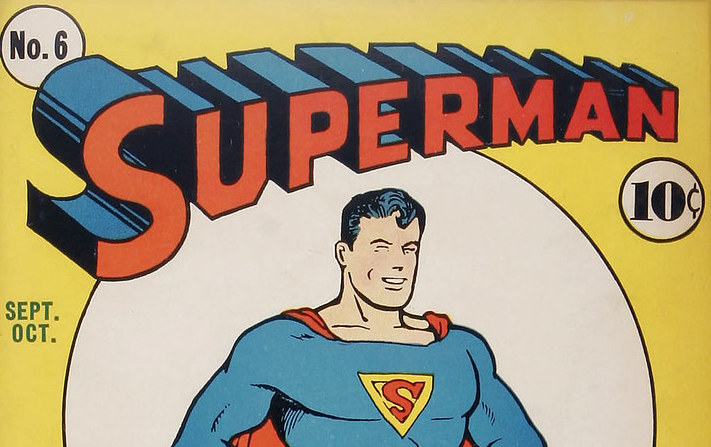
Superman’s hair

Over on Twitter, this still of Henry Cavill looking handsome and dashing in curly hair for a new film inspired me to unleash a Superman Hair Rant which I had been biting back for some time.

As Superman in Zach Snyder’s films, his hair bothers me. They considered doing it right but then decided on this.

Superman’s curly forelock was a component of his character design from the very beginning, before creator Joe Shuster settled on how to draw the S.

It has been part of his look for decades. It is an integral part of his costume — which for a superhero makes it part of his identity.

When Frank Miller sweated down Superman to his absolute minimum iconic fundamentals, he emphasized the forelock.

Without it, he is not Superman. Slicking down his hair is part of his disguise as Clark Kent.

Aside from this being some fun superhero nerd-ing, Superman’s hair matters for another reason: Superman is Jewish. Check out the Ashkenazi Jewish teenagers who created him in the 1930s.

They invented Superman as an immigrant who escaped the destruction of his people by his doomed parents sending him across a vast gulf to America. He moved to the big city, abandoning his Hebrew name “Kal-El” to use the WASPy name “Clark Kent”. Nobody knows who he really is. And they gave him the same dark, curly hair they had … and to keep his secret, they had him slick it back, often hiding it under a fedora.

Roy Schwartz’ book Is Superman Circumcised?: The Complete Jewish History of the World’s Greatest Hero tells us:

They based their hero’s origin story on Moses, his strength on Samson, his mission on the golem, and his nebbish secret identity on themselves. They made him a refugee fleeing catastrophe on the eve of World War II and sent him to tear Nazi tanks apart nearly two years before the US joined the war. In the following decades, Superman’s mostly Jewish writers, artists, and editors continued to borrow Jewish motifs for their stories, basing Krypton’s past on Genesis and Exodus, its society on Jewish culture, the trial of Lex Luthor on Adolf Eichmann’s, and a future holiday celebrating Superman on Passover.

Oh, and he defeated the Ku Klux Klan. Not in a story. For real.

It is worth noting that Superman starts as a second-generation immigrant fantasy. Fully assimilated and a hero to the world he inhabits not in spite of what he inherits from the old country but for expressing it fully. In the Silver Age, Superman engages more fully with his Kryptonian heritage than Siegel & Shuster’s Golden Age Superman could because he is a step further removed from their assimilation anxieties.

My friend Tori says:

Watching Superman become a muscular Jesus is so painful. I have not been able to watch the Superman movies with any joy at all. I guess I liked him better as a comic or as a 60s TV star. Most of the films raise the stakes too high, without any social consideration at all. I know I say this a lot, but Superman was like my grandparents’ generation — enamored with the American dream, thankful for a home, and unable to ever return to where they were born because their birthplace was lethal.

Max Landis is a creep but he is smart about Superman and he said this well:

The question of Superman can never be “am I special, how special am I, am I worthy.” Those are Batman questions, because Batman wants to control. Superman doesn’t want to control, he just wants to help. He can’t be the chosen one; the “last of an alien race” thing is most interesting when it’s incidental.

To me the question always has to be “am I loved? am I giving love? Am I doing the most with the tools I’ve been given?” He’s not the messiah, and him not being the messiah is the heart of the character. He has to be just some normal alien, he shouldn’t be alien royalty, all that dilutes it.

Because it’s an immigrant story. It’s about being true to yourself, making that work, and then carrying that truth and love to be truthful and loving to everyone else. Superman is Clark doing his best.

Little Light on Twitter has a good meditation on Superman as an immigrant:

Honestly I’d love a story where the folks at the Daily Planet reveal they knew Clark Kent was being squirrelly about his ID but they checked his legal records, assumed he was just an undocumented immigrant from elsewhere on Earth, and respected / protected his privacy and safety. They’re all investigative journalists or whatever. Maybe they knew Clark was being evasive and facts weren’t adding up and he didn’t need those glasses but figured it was just to hide from La Migra and chose not to look into it further. Mystery solved. He’s a decent guy, lay off.

In the modern era of the Internet and all, it makes way more sense. And it establishes them as both competent and kind. “You think he’s Superman? Shoot, no, step into Perry’s office for a minute, keep your voice down, we can explain. We checked up on all of this a while ago.”

Why doesn’t he ever do the employee physical? Why is he always running off to take care of vague stuff without good explanations? Why does he claim to be from “Smallville,” which is obviously made up, and never mentions any relative but his parents, who don’t look like him? Whenever there’s the kind of crisis where the police would show up, Clark’s nowhere to be found. He never goes to the doctor. He’s so shy. He works so hard and never really has anyone over to his place. And we all choose to leave it at that, because we care about him.

What does a quiet, hardworking, hyper-polite guy who knows a lot about farm work look like to you? A guy who pays a lot of attention to when sirens go off? Who has secrets, but who never seems to do anything unethical or wrong, who is an exaggeratedly model citizen? Just saying.

Maybe Clark doesn’t even know this is why his secret identity has been working this well, because nobody wants to freak him out, until a Dreamer intern or something gives him a friendly “Your secret’s safe with me, brother, we’ve got to look after each other” at the copy machine.

And then you get a story of Clark finding community and kinship and solidarity with all the human beings whose parents also sent them, with desperate hope, from catastrophe-wracked homes to somewhere there might be a better life, who understand him better than maybe anyone else.

James Gunn update

At the time I add this, we only have teaser marketing for the 2025 Superman film, but already we are seeing that writer / director James Gunn has made some unmistakably deliberate choices about the hair.


David Corenswet as Clark Kent, with a mop of curly hair

  
Superman looking haggard and sad, with a curl on his forehead

Not what I woulda done. But I think it shows that they thought about it, such that I suspect that it will turn out to be better than what I woulda done.

I’m putting down a marker on Gunn’s & Corenswet’s take: Clark is the guy, Superman is the disguise, or more precisely, Superman is Clark’s challenge to himself of who and what he wants to be.

20 October 2022

Princess Grace Hospital scandal BS debunked

A friend credulous about claims from opponents of trans liberation passed me a Twitter thread about the story that Princess Grace Hospital in the UK denied a survivor of sexual assault necessary healthcare because of her belief that trans women are men. It had me going for a minute. Maybe she had been done wrong.

If you do not know what I am talking about, jump ahead to my transcript of the twitter thread, then follow the link to jump back up here. If you have heard the story already, then let us take a closer look.

Of course the thread was bullshit. Opponents of trans liberation deceive systematically as a deliberate strategy. I know this not because I found a source debunking the story, but because I read the screencaps of the email exchanges between the woman and the hospital which were included in the Twitter thread, and discovered so many misrepresentations that it is hard to avoid concluding that the thread was deliberate deception, offering the screencaps as a theatre of rigor with the assumption that few would actually squint over them, given that they look like this:

Reading the emails screencapped in the widely-shared Twitter thread which got me interested, this seems to be what actually happened:

Four days before her surgery was scheduled, the patient went in for a pre-surgical exam and was troubled that a person whom she read as a trans woman looked at her while she was in the exam room. This inspired her to write a vigorously transphobic email to the hospital, saying that with narrow exceptions — her personal doctor’s team, “certified” doctors, and specific exceptions she deigned to allow — no one assigned male at birth should be permitted any contact with her during her care, underlining that she would insult any people she encountered whom she read as trans. The hospital then contacted her doctor. After the hospital had confirmed that doing so would not put this patient at risk, the day after this patient sent her email the hospital replied with curt email telling her that her surgery appointment was cancelled because they could not meet her demands. An email exchange followed in which the patient threatened legal action while insisting that she had done nothing wrong.

Advocates for trans liberation sound unhinged when we describe the bad faith which we have learned to expect from our opponents. This is why. Opponents of trans liberation reliably and shamelessly misrepresent events and outright lie. One must never trust them on a point of fact.

Since the Twitter thread misrepresents the emails it presents, offering them with confusing context, I have put together a clarifying summary timeline. Then below that I have the entire Twitter thread and the email screencaps it offered, transcribed for legibility, so you can see the details for yourself.

Email timeline

Teresa, the patient, was scheduled for surgery on Monday the 10th.

Th 6th — Teresa’s initial complaint

  • During my initial assessment I told you how transphobic I was, with my demands for single-sex accomodations and my refusal to use trans people’s pronouns or to otherwise “engage” with “gender ideology”
  • I am using a private hospital like yours because the are so many rapes at NHS facilities
  • In just the last few years men have started watching so much gross porn that I am frightened that someone will snap kinky porn of me with their cellphone camera
  • When I came in for a pre-surgical exam today, a creepy man in drag came into my exam room for a moment, uninvited, and looked at me
  • This demonstrates that you do not take care to protect women
  • Therefore I request that
    • no males other than doctors or my doctor’s team may have direct contact with me unless I give permission
    • I get a private room and bathroom
    • you log that person coming into the room as a Patient Dignity Lapse
  • Really you ought to offer a single-sex care team like this to all women

Fr 7th — the hospital (CEO?) cancels the surgery

  • We do not share your beliefs
  • We cannot do what you asked
  • Your surgery is cancelled
  • We told your doctor
  • We did this because we have an obligation not only to protect you but to protect our staff

Sat 8th — Teresa threateningly asks to keep her appointment

  • I did not get the medication you promised me for prepping for the surgery
  • I am not a bigot, there is nothing wrong with anything I said
  • You are illegally discriminating against me, and I am a lawyer
  • I really need the surgery
  • I want to keep the appointment

Mon 10th — The CEO explains cancelling the surgery

  • The incident with someone coming into the room during your exam does sound bad; we are already investigating
  • After surgery you would spend some time in the ICU, where we are just not equipped to give you your own bathroom or to ensure that you will not come in contact with male people
  • You can believe what you want, but given your comment about not using pronouns, I also have to protect my staff from you harassing them
  • Before we cancelled your surgery, we checked with your doctor; your health is not endangered by our decision, as there are plenty of other places where you could get this surgery
  • If you still want to get the surgery here, I stand ready to discuss it with you

Later — Teresa complains

  • How dare you pick up my implication that the uninvited visitor showed up during the most awkward part of my exam; it was at a different time in the exam room
  • I do not believe that you are not equipped to give me what I want
  • I am a good person; how dare you suggest that I might “harass” someone or “discriminate” against anyone
  • It is you who are discriminating against me
  • You should have called me to talk this out, rather than talking to my doctor behind my back
  • I am going to make legal trouble for you

The Twitter thread

Here is the deceptive Twitter thread from <@ripx4nutmeg>, with the text of the attached screenshots of emails transcribed. I put the original thread, formatted with individual tweets as paragraphs, in yellow boxes. The email transcripts appear in white boxes in the yellow boxes where <@ripx4nutmeg> put them; I have added the titles of my summaries above to those, so you can connect summary to source. I add a few interjections in regular text like this, to point to disjoints between what <@ripx4nutmeg> says and what the email screencaps in the thread say.

In one of the most shocking stories you could read, a London hospital has cancelled a woman's life-saving operation at the last minute because it doesn't 'share her values'. That 'value' she had was that she wanted the aftercare nurses to be female

Former solicitor Teresa - @XXFemaleOnly - needs urgent, rare and highly complex, colorectal surgery. She selected the private Princess Grace Hospital, which specialises in women's healthcare, for it specifically because she didn't want to be in a mixed-sex facility

A victim of sexual assaults, Teresa made it clear to the hospital how important this issue was to her, by both requesting a single-sex room and bathroom, and stating she would only answer questions on forms about her sex, not her 'gender identity'

During a pre-operation intimate procedure, a male member of staff, wearing a blonde wig and bright lipstick, opened the door uninvited, and peered in. He made eye contact with her, before leaving. Teresa wondered if she was being targeted due to her requests

Feeling frightened and vulnerable, Teresa reported the incident as a 'patient dignity breach', and issued a request that her nursing care from now on must be from females only, and not men who 'ID' as women, something that is allowed under the Equality Act

Th 6th — Teresa’s initial complaint

Dear Staff

I attended Princess Grace Hospital today for a pre-op assessment. My surgery is due on Monday 10th October.

Before attending the assessment, I completed a questionnaire in which I explained that:

1. I wanted single sex bathroom / accommodation facilities during my stay, as per my rights under the Health and Social Care Act 2008 (Regulation 2014) as updated in 2022, and the CQC Fundamental Standards of Care relating to Dignity and Privacy, and in accordance with the Equality Act Schedule 3 Single Sex Exemption; and

2. that I would not agree to use pronouns or otherwise engage with such manifestations of gender ideology. This is in accordance with my beliefs which are deemed to be “worthy of respect in a democratic society” (as per the judgment in Forstate v CGD) and are also listed as one of the nine protected categories (Religion / Beliefs) under the Equality Act 2010.

I selected a private hospital specifically to avoid the NHS, because of the Annex B policy scandal, which has resulted in sexual assaults and rapes in mixed sex facilities, on an industrial scale, as recent FOI enquiries have made clear. I know this, because I am part of an enquiry into it. It is a fact that mixed sex hospital facilities are unsafe for women.

Only five years ago I would not have worried about this; however, the reality is that in the last few years, the use of online porn has grown exponentially. There are a myraid of porn genres (which have been monetised) and no end to the depths of depravity online. 2.8% of heterosexual men have a paraphilia of some kind. Everybody has a mobile phone. I do not wish to be exposed to risk while I am immobilised when I am in ICU following my surgery.

This matter is of sufficient importance to me that I regard the two requirements above as a condition of my contract with HCA.

The pre-op assessment which I had this afternoon at the Princess Grace Hospital included intimate procedures including [redacted]

Towards the end of my assessment, somebody knocked at and simultaneously opened the door without waiting to be invited to enter. The door opened onto a corridor. A young male in what appeared to be a blonde wig, wearing full evening make-up including bright scarlet lipstick peered at me. I am not sure wht his role was or what he was doing there. He made direct eye contact with me (which in itself was quite brazen and so disconcerting), then said something to the nurse and looked away.

I was horrified and shocked that any male member of staff would feel entitled to breach the privacy of a woman patient in such a way in these circumstances. It was especially egregious that this happened in the light of the advance notice I had given to the hospital.

All male staff should be required to knock at a door and WAIT for permission to enter before opening a door when a female patient is in a state of undress. This person obviously feels sufficiently entitled to walk in on a female patient and I find this to be very alarming. This transgression suggests that there is a lack fo discipline / training of male staff to respect the boundaries of female patients at HCA. Although this is following a societal trend (see above) I did not expect to encounter this in a central London private hospital. It makes me feel very nervous about aftercare.

None of this augurs well for women who are vulnerable following major surgery.

Accordingly I have to make the following requests:

1. While I naturally accept that Professor Faiz’s surgical team is mixed sex, I am again stating my wish that the nursing, auxiliary and support staff with whom I will be in immediate contact following surgery are FEMALE ONLY. Please note that trans-identifying males are NOT females.

2. I will accept male staff entering my room ONLY if they are qualified doctors unless by prior agreement with me.

3. I assume that I will have a private room with a private bathroom.

4. I insist that the above incidence is registered as a Patient Dignity Lapse on the hospital incident recording system.

Finally, in light of the above, I do feel that the hospital should follow a protocol of offering ALL women patients single-sex nursing care. Please do not make life difficult for women when they are at their most vulnerable by forcing them into uncomfortable and embarrassing situations. I cannot believe that I am the first patient to have raised this with you.

What are you doing to reassure female patients as to their privacy, comfort and dignity in accordance with the CQC Fundamental Standards in this regard. Does HCA guarantee same sex care to it women patients?

I look forward to hearing from you.


Yours faithfully
Teresa [redacted]
Solicitor (retired)

She then had to go home for three days to prepare for the operation, in which pre-op medication was to be couriered to her. Nothing arrived. She called the hospital and was told the operation had been cancelled, with no explanation given why

She then found an email had been sent to her by the CEO of the hospital saying the operation, which was due the next working day, had been cancelled due to a 'lack of shared values' and to 'protect staff from unacceptable distress'.

Fr 7th — the hospital (CEO?) cancels the surgery

From: [redacted]
Sent: 07 October 2022 19:36
To: [redacted]
Subject: Response from the Princess Grace Hospital

Dear [redacted]

Thank you for your email dated 6th October 2022.

We have reviewed the content of your email. We do not share yor beliefs and are not able to adhere to your requests and we have therefore decided we will not proceed with your surgery at The Princess Grace Hospital on Monday 10th October 2022. We have shared our decision with Professor Fiaz and recommend you make alternative arrangements.

I appreciate this is not the communication you were expecting to receive, however HCA is committed to protecting our staff from unacceptable distress and we believe the cornerstone of good patient care is based on mutual respect and trust.

Notice that <@ripx4nutmeg> implies that Teresa received the cancellation after three days incommunicado, on the eve of her planned surgery, while the email informing her is dated the 7th (the day immediately after Teresa’s email above) not the 9th (the day before the planned surgery). Then <@ripx4nutmeg> leans on this deception about the timeline in the next tweet … which attaches a screencapped email from Teresa contradicting the implication, describing how she saw the refusal the morning of the 8th:

The life-saving operation would have involved two leading surgeons, their clinical entourage, two surgery suites, a robot, a place in ICU and a patient bed for seven nights, and this was all cancelled at the last minute

Sat 8th — Teresa threateningly asks to keep her appointment

Dear [Redacted]

I refer to your email of yesterday evening that I opened this morning (Saturday). It has caused me significant anxiety and concern only two days before a major surgical proceedure for my acute medical condition.

Your staff member (Ms Katie Jones), as late as 16:30 yesterday, assured me that my prophylactic prescribed medicine would be couriered to me this morning (due to widespread local unavailablitiy yesterday). I have relied on this statemenet accordingly.

It appears that you and your colleagues have completely misunderstood/misinterpreted my reasonable advance directive provided during the pre-admission session on Thursday, along with the points made in my email below.

I am a liberal left-of-centre Labour voter and do not object to anyone identifying in any way they wish. That does not mean that I must agree to nursing care from biological males while I am immobilized following major surgery. I am a former solicitor, a former biochemist, and a rationalist. My beliefs on this subject are ordinary, mainstream, and a protected belief under English law. I have always championed minority rights and all aspects and principles of diversity and inclusion. Indeed, my husband is a partner in a major law firm which is a Stonewall Diversity Champion.

My request for post-operative care is no different from the requirements of many female patients of Middle Eastern/Asian heritage, and it is not unreasonable to expect to be accomodated similarly.

As per the Equality Act 2010 and HCA Healthcare UK’s own Code of Conduct (the “Code”), which have mandatory application to this matter, my belief is one of the nine protected characteristics described by HCA. I respectfully suggest that cancelling my proceduere is a discriminatory decision, made in error and haste.

As per the Code a patient has a right to request advance directives regarding treatment. The Code states that they “are honoured within the limits of the law, and our organisation‘s missions, philosophy, values and capabilties”. There is nothing in my own values and beliefs that run contrary to the foregoing. Denying my scheduled treatment without discussion because I have made a complaint about a transgression of boundaries by a member of staff is totally unethical, and contrary to HCA's stated values.

I am greatly concerned that my reasonable request and points in my email below that reflect my legally protected belief have been misrepresentated as unlawful or unreasonable both within HCA and externally to my clinician and his staff. I fully agree that all staff must always be protected from unacceptable distress. However, there is nothing in my request that in any way could be reasonably construed as a cause, or as an intention to cause, such distress. Nothing could be further from my stated intentions.

Futhermore, your decision is breaching the Code under the heading of Patients’ Rights by dismissing my Patient Dignity complaint and request for same sex care:

‘In the promotion and protection of each patient’s rights, each patient and his or her representatives are accorded appropriate confidentiality, privacy, security, advocacy and safeguarding services, opportunity for resolution of complaints and pastoral care or spiritual care.’

Your response is evidently based on an incorrect understanding of the facts of the matter, and has resulted in a rushed and disproportionately harmful denial of my urgent clinical needs. You have not given me an opportunity to discuss the matter or attempt to resolve this misunderstanding. That is a breach of the Code and is unreasonable by any objective standard.

The cancellation of a critical proceedure on Friday evening, when I am due to take medicine tomorrow for a procedure scheduled for Monday, if not reversed (i.e. re-scheduled in the very near future) may have significant implications for my clinical outcome. I have already had one emergency admission with a perforated intestine recently. A delay at this stage increases the risk of a further emergency and so is creating an unnecessary risk to my health. My procedure is particularly complex and requires a robot and two surgeons. I am unwell and the condition is life-threatening.

Accordingly, I would respectfully but strongly urge you to re-consider your decision. I can assure you that I am a wholly reasonable person who appreciates the absolute need to treat everybody in all circumstances with mutual respect and trust.

I look forward to hearing from you as soon as practicable in light of this urgent situation.

I reserve all my rights in this matter.


Yours sincerely
Teresa [Redacted]

The hospital CEO also, in contravention of healthcare regulations, failed to confirm that she would register the patient dignity breach and did not offer to investigate it

<@ripx4nutmeg> attaches to this last tweet another screencapped email which directly contradicts its claim, since in their email the CEO recognizes the “dignity breech” as wrong and says they are already investigating it.

The hospital CEO also, in contravention of healthcare regulations, failed to confirm that she would register the patient dignity breach and did not offer to investigate it

Mon 10th — The CEO explains cancelling the surgery

Dear Ms [Redacted]

Thank you for your email which I read this morning on my return to the hospital.

Your email of 6 October, timed at 23:51 that night, expressed concerns over an incident which occurred earlier that day and included a number of ‘requests’ and ‘requirements’ relating to the surgery which was scheudled for the following Monday (today, 10 October). The incident you described in that email - where an individual entered into the room whilst you were [redacted] in advance of your planned surgery - should not have happened and is under investigation. We will come back to you once that investigation is complete.

Your email also advised (my words):

  • you wanted a private room with a private bathroom
  • you wanted all nursing, auxillary and support staff with whom you would be in immediate contact following surgery to be female only, with male stafff only entering your room if they were qualified doctors or you had previously agreed

You also noted that you would not agree to use pronouns or otherwise engage with “such manifestations of gender ideology”.

Our hospital wards comprise single rooms with ensuite facilities, and you would be admitted into one of these rooms once assessed as ‘fit’ to return to the ward, would be nursed in such a room until your discharge from the hospital. However, our intensive care facility does not comprise single rooms with ensuite facilities and we do not have single sex intensive care facilities at the hospital. We would not therefore be able to meet your request always for a private room with a private bathroom.

I would also note that the Hospital’s staffing is mixed sex. This includes the doctors that work here, as well as our nursing staff, radiotherapists, pharmacists and phisiotherapists and we would not therefore be able to meet your request that you be cared for only by female members of staff or ‘prior agreement’ as to specific male members of staff.

As regards your comment around pronouns, whilst I acknowldge your belief, I have a responsibility to protect our staff from discrimination and harassment.

I should note that before making our decision to cancel the surgery that was planned for today, our team liased with your Consultant to confirm that there would be no risk to your physical health. I also understand that it would be possible for you to have the surgery elsewhere. Having said that, I note from your emails that you would pefer to have your procedure in the private sector, so noting my comment above, I wonder if you might find it helpful to meet with me to discuss how (and if) we might be able to work together to accomodate an admission for you under mutually accepted terms? If you would like to do that, then I will ask my assistant to let you have some dates where I, as well as some of my senior nursing team and your Consultant could meet.


Regards
Yours sincerely
[Redacted]

With this all gone, probably the only alternative available to her at this, now, late stage, is open surgery, something her surgeon did not recommend as the best option

<@ripx4nutmeg> attaches to the last tweet there a screencap of Teresa’s email to the CEO which does not demonstrate the medical consequences the tweet names; it does not even make the assertion. It says instead that the CEO’s email has her feeling disrespected, so she threatens legal action.

With this all gone, probably the only alternative available to her at this, now, late stage, is open surgery, something her surgeon did not recommend as the best option

Later — Teresa complains

Dear [Redacted]

Thank you for your email below.

First, there is an inaccuracy that I feel compelled to correct right now before any investigation takes place, which is that you appear to have misread my Patient Breach complaint. I never said that it took place while intimate swabbing was occurring. I said that it took place during an assessment which included intimate swabbing. That is not the same thing. We must ensure that your trans-identified male employee will not be exposed to ‘unnecessary distress’ by a false claim. Please do not inadvertantly lend the lie to my honest account.

There is no point in going around in circles on the minutiae of the hospital layout and facilities regarding my requests, suffice to say that I don't agree with your analysis below. You have further muddied the water by using your own words and not mine.

Most importantly, I am of good character and particularly resent being portrayed as some kind of hazard to staff. You don’t appear to understand the meaning of the very loaded words that you employ. ‘Harassment’ is an example. It’s a criminal offense. Obviously, as a sex-realist and a lawyer, I have checked the legal position on engaging with pronouns or otherwise. Not using pronouns, or identifying a third-party male, as a male, for example, is not tantamount to harassment. I know exactly where the line lies and never cross it. Kindly refrain from stating, expressly or impliedly, that such a word applies to me.

Neither is expecting same sex care ‘discrimination’ against anyone, and I don’t understand why you consider it to be so. In fact I am the party who has been discriminated against. Your bias in this matter is very telling. There are nine protected categories under the Equality Act 2010, and that there is no hierarchy of rights. Gender reassignment does not take priority over the eight other protected categories. I have three protected characteristics, Sex, Religion / Belief, and Age. Proportionality is key.

Obviously, in the light of the patient dignity breech, I found myself in an invidious position where I had to set my own boundaries as PGH did not appear to have adequate ones in place. Hence the updated request for single sex care. For example, if staff are allowed to chat around the door of the assessment suite straight off a corridor, why not have a screen around the patient? That would have been fine with me.

All these issues could have been resolved if you had followed the mandatory HCA Code and rang me on Friday for a conversation before making a final decision about my proceedure. The correct first step would have been to apologize for any upset for the breech and promise an investigation. If you had said that the person was sorry and it was a genuine error, I may well have let it go. The second step would have been to explain the hospital’s position regarding my requests. I am sure we would have found some form of compromise, it would have been in my interest to do so.

Instead, you appear to have discussed the cancellation of my procedure with everyone except me; I merely received a thoroughly unpleasant emailed notification at 7:30pm. You ensured that no reply to the email could get through over the weekend as you switched on your auto-response facility (as you were no doubt entitled to do); however, you did not supply any alternative contact details for a member of staff that I could talk to over the weekend. I feel that I was dismissed and treated like some kind of pariah, with utter contempt.

I did not pick up your email until Saturday. I was still expecting my prescription and was chasing PGH. That saga was another incredibly stressful PGH service failure. In the course of chasing, I was horrified to be notified that my procedure had been cancelled - by a PGH receptionist. I asked for a senior member of staff at PGH to return my call, but nobody did, which was callous and unprofessional. I was extremely distressed and upset; it made me ill over the weekend.

I can honestly say that I have never encountered such a lack of professionalism and failure to follow due process or protocol as I have experienced while trying to arrange the proceedure. Aside from the total disregard of my interests, I cannot believe that any reasonable person would think it proportionate to lay off two of the UK's leading surgeons and their clinial entourage without notice and leave a robotic suite redundant along with a patient bed for seven ights, on such a ridculous premise as you did. The wasted costs must have been astronomical.

All of this sends a very clear message to women who are concerned about their privacy and dignity, about the priorities and values of PGH. On the basis of my experience, I am certain that I am most unlikely to receive fair or reasonable treatment from you.

Accordingly, I am escalating this matter as a next stage complaint to HCA.


Yours sincerely
Teresa [Redacted]

Just four days after the operation was due to take place, last week, her condition began to deteriorate and Teresa ended up in A&E, in considerable pain. She has rapidly lost weight and may now be too weak to have the open surgery

As she says: "The material reality of my serious illness is being totally disregarded by Princess Grace Hospital in order to protect the feelings of a male member of staff who committed a breach of patient dignity". Read the story here:

Daily Mail
EXCLUSIVE: Hospital refuses to operate on sex attack victim after she requests all-female care because she fears mixed sex facilities are unsafe for women
  • The patient - a sex assault victim - had requested all-female facilities due to concerns over mixed areas
  • She was stunned when someone she believed to be a transgender male opened door in pre-op assessment
  • It prompted her to complain and make a request for all-female nursing care at Princess Grace Hospital
  • The hospital then cancelled the surgery, claiming it was ‘protecting staff from discrimination and harassment’
  • Women's rights campaigners have savaged the hospital’s act, branding it ‘a movement of misogyny in heels’
  • Hospital said requests for ‘single sex care’ were particularly challenging, citing the 'diversity of colleagues’

Inviting misreadings

Is the thread really an argument in bad faith? Am I just quibbling over small particulars?

I submit that it is designed to support over-readings of what it says and what it demonstrates. The thread has been re-shared thousands of times, seen by countless more. At the time that I write the addendum, four days after the thread was initially shared, there are just shy of two thousand quote-tweets of the first tweet alone, many of them saying things which are simply not true. From the first six dozen QTs which Twitter offered me, I found these offering statements of fact contradicting the evidence of the thread:

The CEO of the Princess Grace Hospital is ignoring the single sex provisions of the EqualityAct, and, in effect is sentencing this woman to death by refusing allow robotic surgery to a person who no longer has the option of general surgery somewhere else.
The burgeoning practice of providing medical care only to the ideologically acceptable is unimaginably dangerous. #RespectMySex
London hospital will let a rape victim die unless she agrees to be touched by male staff.

Tells her it is so offensive to tell a man no that they cancel her operation instead.

Did I get this right?
Gilead hospital imposes possible death sentence to rape victim for crime of wrongthink.
We are now at a point where life saving care is being refused by a hospital because the patient's protected beliefs don't align with those they say they hold.

Principles

Same-sex care

An unfriendly interlocutor on Twitter asked whether I consider access to a same-sex care a reasonable request at all. I have to grant that this is an important question. So for the record:

As a matter of care for the comfort and psychological safety for patients, I vigorously support ensuring that as many medical facilities as possible have the capacity to offer same-sex exams to conscious patients, and to have facilities actively invite that request.

My support for trans liberation has me fundamentally skeptical about allowing requests specifically for care from a cis person, but I think the need for psychological safety for traumatized people trumps that skepticism. This makes facilities exclusively staffed by and in service of cis women an intriguing idea. I would criticize the theory — a staff of cis women is not the right way to ensure actual safety — but that does not mean that I would oppose their creation. And for obvious reasons not every facility could provide that level of exclusivity.

So if we set aside intensive care, a patient at a facility with mixed-sex staff requesting that the facility arrange to only have cis women enter their room? That is an even stronger request than requiring only cis women present for examinations. Again, the cultural politics of it make me uneasy, but I hesitate to call it morally wrong to ask. But it should be evident why this is logistically a heavy lift, not simply impractical for that particular hospital (as the CEO said) but impractical, period.

In her email, the patient suggests that this accommodation is a protected and routine right which she has been denied. Given just the logistics, I would be very surprised if that were true. So part of my objection to how this story has been told is that the hospital has been portrayed as refusing a reasonable expectation of a same-sex exam for a conscious patient — which I vigorously support! — when she has made a far more expansive set of demands.

Rights to care

As for a patient’s right to medical care whatever her behavior, the question of stakes and urgency is important. Even if a patient is making the worst insults or threats possible to their caregivers, the Hippocratic principle obligates those caregivers to deliver care preserving life & limb when urgently necessary. I take a universal right to medical care very seriously.

But without life & limb urgency, I do not see how medical caregivers are obligated to endure insults from patients.

And this discussion plug into much bigger questions about the ways in which we (if as a Yank I can include the UK in “we”) fail to support survivors of sexual assault, and people emotionally traumatized in general. One of my Twitter refrains is “we need a politics which is supportive of people who been traumatized and recognizes how people have incentives to exaggerate their trauma and recognizes how people have incentives to ignore and diminish trauma”.

All of this patient’s behavior reflects how that she has not received the support she deserves. We are seeing how a hospital simply cannot accommodate that need by itself; it requires a full-spectrum set of supports.

I vigorously resent the way that opponents of trans liberation have turned this broad-spectrum failure into a club with which to beat trans women. That does a disservice not only to trans people ... it is also a distraction from discussions of broader needs for support for the traumatized.

Shouldn’t they have just called her?

Many commentators suggest that the hospital should have phoned her to discuss after her first provocative email. They have a point: the hospital’s reply is unnervingly curt.

I strongly suspect that there are other elements under the water line here. I imagine them receiving that first email with its crackpottish particulars and not-so-veiled threats of legal action and talking over what they knew. Did they look at the initial intake assessment questionnaire she alludes to? Talk about other encounters the staff had already had with her? Ask people who were there about what actually happened in the exam room?

I imagine them dreading the risk of might happen once she was actually in the hospital for several days, the ways she would find to escalate. And given how the email exchange we can see proceeded, it seems that they called it right.

What of the patient’s legal rights?

I do not claim any expertise in law in general, in the UK legal system, or the particulars of this incident ... but Teresa’s legal argument in her emails sounds screwy to me.

She rests a great deal on her “legally protected belief”, but she then claims that this protects not just her beliefs but her latitude to make demands and to insult trans people. The bit where she says “Not using pronouns, or identifying a third-party male, as a male, for example, is not tantamount to harassment. I know exactly where the line lies and never cross it.” — is some chilling stuff. She is saying that she has premeditated plans to engage in as much harassment-in-the-colloquial-sense as she believes she can legally get away with.

Just the tweets

For folks new to this story, it helps to start by reading just the Twitter thread without the attached emails, the way I did at first:

In one of the most shocking stories you could read, a London hospital has cancelled a woman's life-saving operation at the last minute because it doesn't 'share her values'. That 'value' she had was that she wanted the aftercare nurses to be female

Former solicitor Teresa - @XXFemaleOnly - needs urgent, rare and highly complex, colorectal surgery. She selected the private Princess Grace Hospital, which specialises in women's healthcare, for it specifically because she didn't want to be in a mixed-sex facility

A victim of sexual assaults, Teresa made it clear to the hospital how important this issue was to her, by both requesting a single-sex room and bathroom, and stating she would only answer questions on forms about her sex, not her 'gender identity'

During a pre-operation intimate procedure, a male member of staff, wearing a blonde wig and bright lipstick, opened the door uninvited, and peered in. He made eye contact with her, before leaving. Teresa wondered if she was being targeted due to her requests

Feeling frightened and vulnerable, Teresa reported the incident as a 'patient dignity breach', and issued a request that her nursing care from now on must be from females only, and not men who 'ID' as women, something that is allowed under the Equality Act

She then had to go home for three days to prepare for the operation, in which pre-op medication was to be couriered to her. Nothing arrived. She called the hospital and was told the operation had been cancelled, with no explanation given why

She then found an email had been sent to her by the CEO of the hospital saying the operation, which was due the next working day, had been cancelled due to a 'lack of shared values' and to 'protect staff from unacceptable distress'.

The life-saving operation would have involved two leading surgeons, their clinical entourage, two surgery suites, a robot, a place in ICU and a patient bed for seven nights, and this was all cancelled at the last minute

The hospital CEO also, in contravention of healthcare regulations, failed to confirm that she would register the patient dignity breach and did not offer to investigate it

With this all gone, probably the only alternative available to her at this, now, late stage, is open surgery, something her surgeon did not recommend as the best option

Just four days after the operation was due to take place, last week, her condition began to deteriorate and Teresa ended up in A&E, in considerable pain. She has rapidly lost weight and may now be too weak to have the open surgery

As she says: "The material reality of my serious illness is being totally disregarded by Princess Grace Hospital in order to protect the feelings of a male member of staff who committed a breach of patient dignity". Read the story here: Daily Mail

Wow, she was done wrong, yes? That was how I felt when I read this. Spend a moment securing that thought in your mind.

Then jump back to the top of this post to learn what I found when I looked at the screencapped emails attached to those tweets.

26 September 2022

Sam Harris

I do not pay attention to Sam Harris but hazily thought of him as a relatively-less-terrible exemplar of the Legion Of Famous Bonehead White Guy Intellectuals With Bad Priors. (Understand that I use the term “intellectual” here as descriptive of a position in the social process and a psychological type rather than as validation of his insight. Joe Rogan, f’rinstance, is a true intellectual in the sense that he loves ideas and really does think for himself … while being such an asshole and knucklehead that he is attracted to terrible ideas.) I took Harris as discernibly smarter than someone like Rogan, though hung up on a distinct Stubborn Asshole Atheism which made him a sucker for Islamophobia. But that praise through less-vigorous damnation comes to a close, because I just learned that a few years back, he said this:

As bad luck would have it, but as you’d absolutely predict on the basis of just sheer biology, different populations of people, different racial groups, different ethnicities, different groups of people who have been historically isolated from one another geographically, test differently in terms of their average on this measure of cognitive function. So if you’re gonna give the Japanese and the Ashkenazi Jews, and African Americans, and Hawaiians … you’re gonna take populations who differ genetically — and we know they differed genetically, that’s not debatable — and you give them IQ tests, it would be a miracle if every single population had the same mean IQ. And African Americans come out about a standard deviation lower than white Americans. A standard deviation for IQ is about 15 points. So, if it’s normed to the general population, predominantly white population for an average of 100, the average in the African American community has been around 85.

I recognize that song; it is thoroughly debunked bad faith racist far right The Bell Curve horseshit. Once again I should have recognized that these guys are all swimming in the same Intellectual Dim Web stew of bigotry.

20 September 2022

Social media shitstorms

Drawing on a Twitter thread of mine about the need for an ethos for social media shitstorms (significantly refined in Jan 2024):


I believe in the liberal-as-in-liberal-democracy approach to the Paradox Of Tolerance, which says that we need all six of these principles working together.

  1. Honesty — always speak in good faith, telling the truth as well as one knows it, especially about oneʼs own ideas and intentions
  2. Generosity — start from a presumption that everyone speaks & acts in good faith
  3. Vigilance — always watch carefully for bad actors
  4. Skepticism — demand strong evidence before accepting that someone is a bad actor
  5. Transparency — publicly document evidence of bad actors
  6. Safety — ruthlessly exclude demonstrated bad actors

Shitstorms create incentives against those principles. One must work hard to preserve them.

Pursue clarity

Shitstorms sow confusion. Resist this. Everything one says every time one engages must pursue clarity — especially about what actually happened. Return as much as possible to the known specifics of what people said and did. Push back against the telephone game effect.

Every comment will necessarily summarize complex issues and events. Respect how tricky this is. Respect the effort it involves.

Remember how summaries can easily imply something different from what happened, even when technically accurate, out of clumsiness or malice. Understate your case and steelman positions you disagree with, to counter your own biases.

Expect honest mistakes

Never assert that facts or conclusions are “obvious”. Counsel patience and thoroughness, even when you feel confident that you know the truth.

When a shitstorm gets thick, some people acting in good faith will still share misleading or simply false commentaries. Document the errors as specifically as you can, tell anyone you see sharing those errors, and spread warnings about misinformation afoot. Since such errors are inevitable, do not take them as discrediting all criticisms; even reprehensible actors will face false accusations, so do not exonerate the subject of a shitstorm based on a single disproven accusation.

Register the ideological biases of commentators but do not dismiss all commentators on one side for their ideology, even if most of them share an ideology you oppose.

Respect & support newbies

Shitstorms get harder to understand the longer they proceed. Remember that anything you say may become someoneʼs introduction to the issue.

Recognize the tension between this need for diligence and the need to respect the time & energy of people caught in the shitstorm. Neither demand that that any particular individual catch you up nor fault people for asking for an explanation of the shitstorm.

Expect bad early responses

Shitstorms are disorienting and upsetting. They bring out the worst in anyone. Never indict the subject of a shitstorm based on their initial response; those will always have failings.

That does not mean to refrain from criticism. Share thoughtful criticism. Help people think. Clearly name the problems you see in commentaries. Resist the temptation to dismiss commentaries as “nitpicking”. Resist the temptation to dismiss something or someone over one clumsy point.

Dawdle to judgment

Respect and praise people who were attentive to the issue early, who talked about it publicly before the shitstorm. But do not covet that position. Do not try to be right early. Do not take pride in drawing a conclusion with less evidence than others.

If you were among those watching the subject for a long time, explain why, describe your conclusions, and share information about what happened and how you knew. Point to where people talked about the issue before the shitstorm.

Never brag about having “called it” early. Never fault people who did not already know about those sources. A shitstorm demonstrates that information you thought was “everywhere” was not.

Be kind

Shitstorms inspire ruthlessness. Counter that.

In the heat of a shitstorm, you will misread people. Check your understanding. Expect to make mistakes anyway. Apologize readily.

In the heat of a shitstorm, people will misread you. Assume good faith. Correct misreadings clearly but patiently. Forgive readily when people admit an error.

In the heat of a shitstorm, be generous, honest, transparent, and skeptical, even if you fear that bad actors will benefit. You can undo being too gentle but not being too harsh. Turning out to be right in the end does justifies neither cruetly nor misrepresentations. Kindness extended to even the worst actors during a shitstorm benefits the entire community.

In the heat of a shitstorm, return again and again to what facts are known, what are not, and what sources ground that knowledge. You may not have the capacity to respond to every request for particulars & sources, but never take those requests as insults.

Hate the shitstorm dynamic

Shitstorms are inherently traumatizing.

They hurt every participant. They often hurt innocents the most. All too often, they even hurt the guilty more than they deserve.

Never say the trauma was “justified”, however necessary it was to confront the issue. At best a shitstorm is a necessary evil, when other remedies have failed. They are never a positive good.

Related

I have posts about how I handle sealions and discussions in my space.


Laura Jedeed has a useful post COINTELPRO-Style Behavior: What It Is, How To Recognize It, What To Do When You See It which offers similar counsel.

Here are some COINTELPRO-style tactics we should all watch out for:

  1. Accusations of impropriety, espcially in the days following a successful event. Bonus points if the accusers:
    1. Say they have strong evidence but never provide it, or demand you believe them without evidence.
    2. Use the incident to disproportionally paint a person or group as irredeemably tainted.
    3. Pivot, when you ask reasonable questions about the accusations, to accusing you of being complicit in the crime. This behavior takes advantage of your desire to be a good person and invokes fear that you’ll be cast out in a time when we need community more than ever.
    4. “But Laura, are you saying we should never listen to people who accuse groups or leaders of impropriety?!!” Absolutely not! Serious accusations must be taken seriously. Also, ask for evidence. Opt for dialogue and conflict resolution over ostracism and denunciation when possible.
  2. Broad statements about a faction within a wider organization. Some paraphrased examples I’ve seen recently:
    1. “the left is always attacking liberals, they hate us and can’t be trusted”
    2. “Establishment libs organizing protests are deliberately pacifying the populace”
    3. “Where are Black people in the Palestinian solidarity movement?”
    4. “These protests are unserious, useless, performative garbage. Typical white people behavior.”
  3. Constant drama. People are going to get into fights and have personal beef, but if someone is ALWAYS having personal beef, and ALWAYS litigating that beef in public within activist circles, that person is disrupting the movement whether they mean to or not. This is a known COINTELPRO tactic.
  4. People who openly call for violence, property destruction, or other illegal behavior. There is literally NEVER a reason to do this. If violence and/or property destruction become necessary, why would you put it in writing?! We KNOW the Trump regime is going after people for domestic terrorism. Encouraging people to advocate for violence or property destruction online is a great way to take someone out of the fight for absolutely no gain.

Again: the people doing these things are PROBABLY NOT FEDERAL AGENTS. They probably are doing these things because they understand how high the stakes are and desperately want things to succeed. It doesn’t matter. These types of actions destroy solidarity, and we have to shut them down immediately

If you encounter these ideas online, some things you can do (from least to most aggressive):

  1. Calmly point out that the statement seems counterproductive and explain why
  2. Ask for evidence of serious accusations
  3. Call them out. Establish a norm of not putting up with that shit
  4. Block them

26 August 2022

Product management menagerie

Dean Peters has a smart and fun taxonomy of (bad) product management patterns with fun animal names, starting from familiar classics like HiPPO and the seagull.

  • HiPPO — Highest Paid Person’s Opinion
  • RHiNO — Really High-value, New Opportunity
  • ZEbRA — Zero Evidence, but Really Arrogant
  • WoLF — Works on Latest Fire
  • Seagull — Swoops in, makes noise, craps everywhere, leaves a mess
  • YAK — Yet Another KPI
  • CoBRA — Cognitive Bias-Related Assertions
  • PUMA — Promotes Unusually Meaningless Assumption
  • GOOSE — Guesstimating Overly Optimistic Scheduling Estimates
  • PUFFIN — Plans Unending Feature Factory INitiatives

08 August 2022

Varn

Round one

I wonder who really wants to experience a few hours of me talking with an old internet frenemy who has smart, strange radical politics I deeply disagree with. But if you do? Here it is:


You can find my precipitating essay what, if not liberal democracy? right here on this here blog. I never really got an answer out of Varn to its questions; the discussion meandered. I did have fun, though.

Round two

After that first discussion, Varn & I agreed that we had succumbed to being a little too genial to grasp the nettle of the original question … and had to confront the accelaration of MAGA fascism in the US. So we did an even longer call: