Showing posts with label comix. Show all posts

17 April 2025

A hero

Rescuing a thread from the Bad Place which explains why I caught feelings from a glimpse of a tiny little street sign in the background at the 15-second mark in the first proper trailer for Fantastic Four: First Steps.


I will never, ever locate and re-read Marvel Two-In-One Annual #7 because I want my memory of it from when I was twelve to remain pristine, because when I think of a hero, I think of that comic and the ever-lovin’ blue-eyed Thing.

In the comic, this big blue zillion-year-old alien guy The Champion comes to Earth. He loves to box and travels the Cosmos challenging people to boxing matches. So when he arrives at Earth, of course he teleports a bunch of Marvel superheroes to his boxing gym.

The heroes are like, dude, we are not getting into the ring with you for your entertainment. The Champion is like, I am not asking, I am telling. Defeat me in a boxing match or my spaceship will blow up the Earth. So it’s superheroes vs. The Champion for all the marbles.

Cut to a huge stadium. The boxing match will be simulcast on all the TV channels.

One by one, The Champion squares off against various brawny superheroes. They get quickly dispatched or disqualified. The Hulk cannot keep his composure and obey Queensbury rules. Thor refuses to put down Mjolnir. Wonder Man probably just got KO’d with one punch because he’s such a doof. I do not recall all of the details.

The important thing is that the last hero left is The Thing.

The Champion soliloquizes: Woe is me, I have traveled from one end of the Universe to the other seeking a worthy challenge, but I am just too good at boxing.

The Thing asks do ya plan to win the fight by boring me to death?

Fans of The Thing know what time it is. But alas, it is immediately apparent that it is not The Champion who will get clobbered. The Thing is outmatched!

Ding. The first round ends and The Thing staggers back to his corner. The Champion soliloquizes some more about how sad he is that his might is peerless. The Thing tells the Champion I’m just gettin’ warmed up.

Ding. Round two. The Thing keeps taking a pounding. The Champion brags that the fight is a foregone conclusion. The Thing says my Aunt Petunia throws a better punch than you.

Ding. The round ends. The Thing is bleeding. The Thing. Bleeding. Twelve-year-old Me was very not okay with this. I had seen him take hits from wrecking balls, kaiju, howitzers, lasers, and what have you … and just dust himself off. This is scary.

As The Thing catches his breath in the corner, the Fantastic Four are there. Reed is like, don’t do this to yourself, Ben. The Thing is all, sorry Egghead but ya know I am just too dumb ta know how ta quit.

Ding. Round three. The Champion continues to mock The Thing while beating the tar out of him. He moans once again I have been denied the glory of a real fight. The Thing tells him I’m from Yancy Street so I know more about a real fight than you ever will.

The Champion lands a punch on The Thing which lays him out on the canvas. People in the stadium and around the world gasp. The ref starts counting.

Just as the count is about to run out, The Thing stands back up and puts up his fists, of course. But he looks bad.

The Champion mocks him some more. Why get up? You are bleeding and your ribs are broken and you can barely stand, Loser. I’m not even winded. It’s over.

The Thing says: The deal here is that when the fight ends the world ends, right?

The Champion says: Yeah, that’s the forfeit since you are such a loser.

The Thing says: Then I’m gonna keep gettin’ up, no matter how many times ya knock me down.

Ding. The fight is back on. But the Champion lowers his fists.

The Thing is all are we gonna fight or what?

The Champion tells him: No. The fight is over. Sure, I could knock you out, eventually. But you will not be defeated, will you? Not really. Not ever. I travelled billions of light-years seeking a worthy opponent and never even knew what one was.

Superheroes are silly. That story is silly. And of course that story is in no way original. It’s older than the written word. But I first got it in the form of The Thing.

I got teary retelling it.

So it was good seeing a little sign announcing “Yancy St”. I know a hero from that neighborhood.

25 November 2024

Yes, 300 is fascist


Leonidas looking fierce in a promotional image for Zach Snyder’s film adaptation of ‘300’

Unintentional fascism

Both Frank Miller’s comic 300 and Zach Snyder’s film adaptation have deeply fascist sensibilities. I feel certain that neither creator intended this, or even knows it, but there it is.

I have read most of Miller’s work. I am sure he would reject any reading of his work as fascist since he sincerely hates Nazis and US conservatives, and he often is a political satirist. But fascist themes recur in his work. Someday I have to write a thorough examination of them in his masterwork The Dark Knight Returns, but that is a big undertaking; for now, I will just note that at the climax of the story has Batman arrive as a man on horseback (literally), his mere presence immediately turning the violent energy of young men away from the perversion & chaos permitted by decadent elites, turning them toward a restoration of purpose & order, and that then spreads through society.

I also confess to enjoying many of Snyder’s films as a guilty pleasure, including 300. Patrick H. Willems’ video-essay Our Himbo Auteur examines Snyder’s whole filmography; like me, he concludes that Snyder’s tendency toward fascist themes is unconscious. Snyder is well known for seeing himself as a libertarian — he dreams of someday making a film adaptation of Ayn Rand’s The Fountainhead — which I feel confident that he would offer as inherently opposed to the authoritarianism of fascism. But the fascist sensibility includes more than just authoritarianism.

Both creators describe 300 as apolitical, just a gripping yarn animated by romanticized ideas of heroism and bravery. In that too I take them as sincere … and wrong. I think both were trying to embrace the violence as self-consciously Bad Wrong Fun but stumbled into reproducing fascist themes along the way. All stories have politics, and it is difficult to imagine a more thoroughly fascist work in either medium which is not intentional propaganda.

Fascist themes

  • Presenting & romanticizing the Spartans as a society in which men define themselves entirely as warriors, in which war is necessary, noble, and good for the creation of a strong society. Every man a violent hero.
  • Presenting this warrior ethos as making the Spartans superior to the other ancient Greeks — superior as men and superior as guarantors of civilization — because the other Greeks are devoted first to their trades and crafts. (A familiar, ahistorical reactionary fantasy.)
  • Presents the Spartans as defending Western civilization from decadent, perverse, dark-skinned, monstrously inhuman queer-coded hordes from distant countries with different cultures determined to destroy their society.
  • Offering just a glimpse of the other institutions of Spartan society, casting them as hopelessly corrupt in contrast to the soldiers. Miller emphasizes the parasitic priests, Snyder the cowardly ruling council which demonstrates that “democracy” is a sham.
  • Depicting Spartan society as made great through ruthless eugenic elimination of the unfit and traumatizing training of boys to be men who refuse to admit any fear, pain, or weakness.
  • Presenting Leonidas pitching Xerxes’ herald into a pit as a seeming mistake which proves to save Greece, romanticizing visceral emotion producing violent action as superior to calm, reason, openness, and such.
  • Romanticizing the bodies of athletic men, framed in terms which vigorously insist that this is not eroticized.

These fascist themes are not inherent in the story of the Battle of Thermopylae, even as the Greek propagandist-historian Herodotus told it. Miller thanks Victor Davis Hansen at the start of 300; Hanson is a notorious militarist racist neocon enthusiast for the Iraq war whose misreading of Thucydides has long been notorious and pernicious. Every change to the real history in both the book and the film point in the same, fascist direction.

And I have to underline that 300 offering the Spartans in contrast to the decadent queerness of Xerxes, his army, and the other Greeks is a particularly funny and ugly touch if you know anything about the historical Spartans.

B-b-b-but satire!

Defenders of 300 say that its divergences from history are justified by the ending, which presents everything we have seen as actually a telling by the surviving Spartan Dilios, who has romanticizized Thermopylae to gain Greek support for the war against the Xerxes.

Thus, they claim, the hidden meaning of 300 is a satire of fascist propaganda, just as Snyder’s Sucker Punch attempts a critique of its surface text.

Snyder would make this point in an interview with Total Film, stating that he sought to place audiences in a tight spot by showing the Spartans’ savagery in blunt terms as people who are prepared to throw newborn children off a cliff if they’re insufficiently healthy, and posing the question “These are the people you’re supposed to go with on this journey?” Elaborating on the point, Snyder felt that “part of the fun” of 300 was to depict a society leaving its sons to fend for themselves as children and only prepared to allow them to return home if they survive, and asking “Those are your heroes?”

But that does not stand up on examination of the actual film. When we see the “real world” of Dilios telling the story, it looks exactly the same. Nothing in the text of either work suggests that the fascist themes are deceitful, or bad in any way.

“But it shows the Spartans doing obviously bad things!” cry its defenders. But everything bad is shown to us as not bad but romantically badass.

These defenses point to its portrayal of Spartan eugenicist infanticide as showing that the story is unsympathetic to the Spartans. Yes, the sensible reader or viewer should find infanticide morally repulsive. But does the story itself share that reading? Both book and film offer the infanticide quickly, to frame other events which it lingers over.

It shows us King Leonidas as a child, facing a test of manhood in the wilderness, fighting a wolf. That he would be compelled to do such a thing is abusive, but the story revels in how this shows that Leonidas is a badass.

It shows the Spartans encountering the deformed Ephialtes, who survived infanticide and aspires to join the Spartans in their ranks. Ephialtes is presented as disgusting. Leonidas gently turns down his help, which is not just portrayed as a kindness but too much a kindness, since the story goes on to have Ephialtes betray the Spartans to the Persians, who seduce him with queer-coded debauchery with other deformed figures. Ephialtes in the story proves as weak in spirit as he is in body, another fascist theme.

Contrast 300 with Verhoeven’s film adaptation of Starship Troopers, which is a satire of fascist propaganda. Troopers does what 300’s defenders claim 300 does: it presents fascist propaganda on its own terms, expecting the audience to supply its own ironic reading. But unlike 300, the fascist voice of Troopers is not remotely seductive. The soldiers are not badass, they are incompetent. We get not the glorious sacrifice of 300 but screaming agony and mutilitated soldiers. The fascist sensibility is never cool, it is cringe-inducingly absurd. Fascist aesthetics get marked increasingly unambiguously, culminating in a major character wearing an imitation of an SS uniform. 300 includes nothing similar.

It is not satire when a work presents bad ideas. It must actually, y’know, satirize them.

16 April 2024

A taxonomy of superhero tropes

Miss Gender <@girldrawsghosts> suggests:

ill die on the hill that batman, superman, the hulk, and spider-man are the four definitive superhero archetypes

every other comic book superhero falls somewhere within the the venn diagram of the four

I’ll break down what tropes each codified

batman

rich - gothic - human - technology-based - scientist

superman

“other” being - nearly invulnerable - but one specific weakness - powers are vaguely defined at times, and explanations change - reporter

the hulk

caught in experiment they were responsible for - turns into a monster - is treated as a monster - clearly defined separate personalities

spider-man

young • comic relief • powers come from event he wasn’t responsible for • traversal method defines characterization • the Everyman (not as a disguise or secret identity, but literally in terms of the core of the characters entire personality)

now yes, things like doc savage and the shadow predate superman and batman, but again, this is about the definitive tentpoles of a character. the ones that solidified them into a rue archetypes.

It’s also SUPER important to stress that these archetypes were established between the 30’s and 60’s, so things have been added or removed since then as time and culture has evolved. I’m talking about when they locked in the fundamentals.

That got me thinking about four poles of superhero Archetypal Stuff in a more structured way:


    archetypal hero
Batman Supes Spidey Hulk
    core
paragon super-human everyman monster
    temperament
brooding angelic wisecracking multiple personalities
    motivation
trauma benevolent adolescence passion
    origin
tragedy essence accident self-inflicted
tragedy
    powers
gadgetry flight eccentric theme brawn
    profession
rich reporter student scientist /
engineer
    tone
gothic / noir optimistic soap operatic tragic

You can mix-and-match these tropes, sometimes even combining two from the same axis, but the Big Four Tentpole Superheroes reflect particularly strong clusters.

16 November 2023

Victor von Doom

With rumours making the rounds about Marvel Studios’ casting of the Fantastic Four, I’m thinking about how they will handle Victor von Doom.

Almost a decade ago, when it started looking like Fox & Marvel were going to work things out for Marvel Studios to share the rights to use X-Men, as Sony eventually did for Spider-Man, I said “eyes on the prize”: forget the X-Men, Marvel Studios needs to get their hands on Doctor Doom.

That was an exaggeration ...

A long aside about Marvel, Fox, and the X-Men

When I said right after the release of Winter Soldier that Marvel Studios had the perfect media franchise I thought maybe I was speaking the obvious too late. But their best days were still ahead of them. Right now a lot of people think their best days are now already behind them, but not me. Yeah, Marvel Studios have had a run of stuff which has not been bad but has been weak. I think that has largely been echoes from covid shaking everything up.

I believe that Marvel Studios chief Kevin Feige already deserves a Thalberg award, and is gunning for one when he says “there’s 80 years of the most interesting, emotional, groundbreaking stories that have been told in the Marvel comics, and it is our great privilege to be able to take what we have and adapt them”. Disney Imagineers are undoubtedly hard at work disassembling that deep bench of experiments in overlapping, serialized stories to assemble new giant killer francise robots from the parts.

Dongwon 송동원 raises a legitimage concern about that:

honestly pretty annoyed by the “thanos was right” thing. I feel like it mocks a lot of us long term x-men fans who are deeply invested in magneto’s perspective as a more radical, revolutionary voice in comics’s most prominent and consistent examination of marginalization.

especially considering how many alt-right bros latched onto Thanos’s fascist genocidal logic. I know it’s ridiculous, but I honestly feel like “Magneto was right” actually means something to a lot of us that isn’t just contrarian, crypto-fascist, genocidal apologia.

I dread the days feige finally figures out what he wants to do with the x-men, honestly. I genuinely enjoy so much of the MCU nonsense, but what makes the x-men so special is so antithetical to the underlying logic of the MCU machine.

But I feel hopeful that Dongwon has it backwards. I think that as Feige’s control over Marvel Studios strengthens, he will give more latitude to the different creators, which will enable stuff like giving us the X-Men with a sensibility in tension with what we have gotten with the movie Avengers. Plus I think that desite a wobbly start, streaming series will turn out to be a great format for Marvel. Their first long run of movies like a huge, slow TV series was great but showed how the canvas of a few features each year is still not big enough for what the characters and setting can do.

Marvel Studios has their Game Of Thrones waiting in reserve: Chris Claremont’s epic, soap-operatic run of X-Men comics. Douglas Wolk, who literally wrote the book on how much storytelling space there is in Marvel Comics, says:

If you only know the X-Men from Fox’s movies, you may not suspect how deep that catalog gets, and how many characters it involves. Marvel Comics currently publishes 11 monthly X-Men-related titles, and that’s not even a record. 2019’s simultaneous miniseries House of X and Powers of X — the former about mutants establishing a nation of their own called Krakoa, the latter showing the X-Men’s secret past and what might become of them 100 and 1,000 years in the future, each triggering bombshell revelations in the other — set up seemingly endless story possibilities that have been playing out ever since. The current era of X-comics, focused on Krakoa becoming a global political force, could easily turn into a cluster of movies and TV shows and specials bigger even than the MCU in its current form.

I believe it. We are mad at him now, but remember that the first guy to show up writing TV inspired by a youth reading Claremont’s X-Men drew on its moves to create Buffy The Vampire Slayer as not just a hit TV show but a cultural phenomenon. There is an army of nerdy, brilliant, seasoned middle-aged creators whom Marvel Studios can tap to work on this.


So yeah, I was exaggerating when I said that Marvel Studios could forget about how buying Fox meant getting the X-Men back. But. Spending a few billion dollars on Fox would have been worth it to the Mouse even without the X-Men.

Victor Über Alles

At this point I really feel the Marvel Cinematic Universe having a Doom-shaped hole in it.

Marvel Studios has been doing more and more cosmic stuff, giving us references to the baffling cosmic godlike Celestials. Thanos is gone for the forseeable future, which points us right to Galactus. They don’t need the Fantastic Four on stage to tell stories about Galactus, but his key story involves them so you want them there before too long. Plus when RDJ wriggled out of the golden handcuffs, it left them with an opening for the real irresponsible “hero” mad scientist with his fingerprints all over Marvel stories: Reed Richards, Mister Fantastic of the Fantastic Four.

To bring Galactus on stage, Marvel Studios needs the human who stands taller. With Richards on stage, they need the man whose brilliance is greater. With Celestials on stage, they need the mortal daring enough to rival their power.

Scientist. Wizard. Tyrant. Meglomaniac. Genius. The greatest villain in Anglophone literature.

How I would do it

Obviously it starts with teasing.

First a post-credits stinger, of course. I like Moviebob’s idea from his elaborate, clever Fantastic Four pitch of giving him just one word after the first FF appearance — “RrrriiiihchARDS!!”. But it could be anything. Maybe a secondary character who got driven off earlier in the movie shows up to reveal that they were not simply defeated, because they got away with an unnoticed MacGuffin to deliver to Doom. Maybe have Doom on his Latverian throne steepling his fingers to signal to civilians that he ranks like a Thanos-like master villain, so they ask their nerdy friends about him.

Then there is a thing in a movie or two where we catch a glimpse of him on the periphery. Maybe he’s on video of some shenanigans and someone says “is that who I think it is?” and one of the less experienced heroes is all “who?” and gets blown off with “the most dangerous person on Earth — you don’t want to know”. Maybe he aids someone with an escape.

Then we get a proper cameo, with Doom in his genteel, regal mode. Maybe he’s at an international conference where he debates with Shuri and arrogantly corrects her about nanotechnology or some such — the worst part being that it turns out later in the movie that Doom was right.

Then in his first major appearance, Doom crushes a few heroes (or villains!) in an early scene. Who is this guy? Reed is there to explain with some essentials from Doom’s elaborate backstory. This includes a flashback of young Doom swearing his vendetta against Richards over The Accident leaving a few tiny scars which only made him look more badass. Toward the climax of that movie, Doom gets his hands on some earthshattering power — maybe siphoning it off of Wanda or an Eternal — and the first thing Doom does is wish away the scars he owes to Richards, triumphantly removing the mask. Of course doing that delays him enough that he does not get time to complete his plan to open a portal, nuke Madripoor, turn the Sahara into a garden, or whatever. The heroes (or villains!) witness how Doom is brilliant and powerful but undone by his own ego.

Then we get a movie with a one-scene cameo. Some character we need to establish as badass gets a flashback to a few years back, when for a moment they knocked Doom’s mask off. We don’t want to overwork the disfigured villain trope so this will be the first, last, and only time we see Doom severely scarred. Richards didn’t know about this! Nerds go yeah and civilians go whoa.

At this point Marvel can treat Doom as a fixture of the world. We don’t see him much, but it seems like he is connected to almost everying. Some character has Latverian tech. Someone has a meeting cut short with Namor or Contessa de Fontaine because Doom is here to talk. Et cetera.

Then we get a movie where magic is a big piece of the plot. In the course of things, Reed Richards and a few other characters track down a renegade monk from Ta Lo or Kamar-Taj who explains that the only person who has the plot token or secret knowledge or whatever our heroes need is Doom. “But you don’t want to talk to that madman.” Why not? “I was there when he put on the mask for the first time. In his obsession, he reached for it before it had finished cooling. He did not scream, or even gasp. There was only the sizzle as it burned his flesh.” Reed is shocked ….

Responding to early hype

Added later

After thinking about the surprise casting of Robert Downey, Jr. as Doom, together with Marvel Studios saying that the first Fantastic Four movie is set in an alternate-timeline-1960s, here’s the way I would play it, which I suspect is close to what Marvel Studios will do:

This new timeline — call it Earth-1961 — is a lot like the early years of the main comics timeline of Earth-616, but Victor just does not exist. Tony was Reed’s college frenemy, and The Accident screwed up his heart instead of his face, of course. Tony-Doom is all technology, no magic, and has Stark Industries instead of Latveria, but is otherwise pretty much the Doom we know. Downey hams it up as a guy who is Tony With The Reckless Meglomania At Eleven.

Earth-199999 (the main timeline of the Marvel Cinematic Universe) has had Victor von Doom all along. He is almost the same as 616-comics Doom. Mask. Mad science. Magic. Dictator of Latveria. The big difference is that he is not a supervillain, just a weirdly-dressed tyrant, because he killed his universe’s Reed Richards before the Fantastic Four origin could happen.

Then shenanigans bring Tony-Doom and the Fantastic Four to Earth-199999.

Victor is chilling in his castle, watching the news, and there is this fake Doom. Victor seethes. Then … what’s this? Do his eyes deceive him? No. No. No!

RRRIIICCCHHAAARRRDDDSSSS!!!!!

Also …

When the Thing shows up in Earth-199999, it just turns him back into human Ben. That way, in the next movie, we get a scene where things are dire and they need the Thing and Reed says, “in this universe I can switch you back and forth with no problem”, and … guess what happens.

09 November 2023

Peter and Miles

Rescuing some threads about Spider-Man against the Twitterpocalypse

Dapper Dan Gvozden on kids named “Ben”

I wanted to tell the story of how important J. Totino Tedesco and Brad Meltzer’s Marvel Comics #1000 page is to me.

[JK note: I am enough a fan that this page shatters me, and I am not too proud to admit it]

For years, I had been struggling with the choice of whether or not to have a child. My parents used to say, “You’re never ready," whenever I suggested the timing wasn't right. This always felt disingenuous, surely there are better and worse times to have a kid. That all changed when I saw Lord and Rothman’s Spider-Man: Into the Spider-Verse. I loved how their script reframed Miles and Peter’s life-choices into “It’s a leap of faith." For Miles, that was brilliantly portrayed by his leap off the building.

The brilliant, and often ignored, element of this story is that the glass behind Miles breaks when he jumps. The reason isn’t because of his momentum, but because his fear-activated Spider-stickiness is activated. He’s jumping despite his fear.

Miles repeats Peter’s line back to him in the film's final moments. “It’s a leap of faith.” Here the context changes and it is exactly what Peter needs to hear to regain confidence in himself, heal his fractured marriage, and try to have a child. I wrote about this in a piece for The Hollywood Reporter where I argued that allowing Peter to grow up and for Miles to take his place as the young Spider-Man was a bold move that the comics should consider. Responsibility only increases the older you get.

This one movie completely changed how I felt about fatherhood. No longer was I looking at parenthood as “You’re never ready”, as if I was about to get hit by a bus. But as, “It’s a leap of faith.” I could do this! And … a couple years later I did. Meet Ben.

Now back to the comic page from Marvel Comics #1000, entitled “We’re Calling Him Ben”. I’m sure you can guess my son’s name has something to do with this comic. You’d be right. Let me explain.

My read on the comic is as follows: Peter saves a pregnant woman who responds by wanting to name her son after him. He gives the name “Ben” to honor his late uncle. We see the impact of Spider-Man doing this many times, saving people and sparking a rash of kids named “Ben”. My favorite detail is almost hidden in the bottom corner, after all the other images. A lone word balloon reading “Ben”. I read this as the infinite baby. The idea of the endless number of good deeds that Spider-Man will do, especially as his comic continues infinitely.

I remembered this when it came time to name my son. I love the idea that our good deeds can echo into the next generation and serve as a moral guide. I can only hope that I can pass on my morality to my son, who can do the same, and on and on.

But it also speaks to me of the power of fiction in our lives. That I was inspired to have a child by a movie’s fictionalized version of a man wrestling with the concept of fatherhood. That so much of my life is built around principles I’ve learned from fiction.

I make, analyze, and study fiction because I believe in the power that it has to pass along empathy, entertainment, and values. This single-page comic story addresses all of those things and represents all I want to pass on to my son. A print of this page hangs in my son's bedroom. We look at it every morning and it is his absolute favorite image in his room. I hope one day I can explain its importance. Excelsior!

TJ Collins on Miles’ choice

The montage sequence in Spider-verse is amazing but let me offer up why this scene is the most important scene in the movie.
A theme throughout the movie was that Miles didn’t have a choice but to do what others wanted of him. Whether by peer pressure or pressure he put on himself, Miles felt like he had no choice but to do what others thought was right for him. What was responsible. What was expected.
This message was delivered over
and over
and over
and over again.
It was made to feel like the only choice he could make for himself was whether or not to tie his own shoes.

What does doing it all for everyone else lead to? He almost died, his uncle was killed, and his dad thinks he did it. His world is imploding. The only place of refuge is the school he tried failing out of. No sooner than unmasking and he's reminded of those Great Expectations.

The spider peeps take the goober and he is left alone. In a way, he gets what he wants. He’s been relieved of the great responsibility that comes with his great power. But he's still literally and figuratively trapped.

Then comes a moment of clarity for his dad. He realizes that forcing things on him, even if well intentioned, is only pushing him away. If he doesn’t want what happened to him and his brother to happen to him and his son, then Miles needs to be able make choices for himself.
Quick flashback to earlier in the film when his dad literally pressured him into saying, “I love you” back.

So, now we come back to the single most important line in the movie. Not with how it starts but how it ends.

“I love you.

You don’t have to say it back though.”

This dad, who earlier in the movie forced his son to say “I love you” back to him, was now giving his son the choice to respond. The burden of expectation was finally lifted from Miles allowing him to choose for himself what he wanted to say or what he wanted to do.

I love how the movie gave this sequence time and space. Realistically, the situation hadn’t changed. He was still alone in his room stuck to a chair. But now he’d been given the chance to choose for himself. What does he want to do? What kind of person does he want to be?

Naturally he chooses to be Spider-man. That choice giving him control of his powers. Literally and figuratively freeing.

I could go on and on about this movie forever but I’ll stop there. The montage was great because it was a satisfying payoff to a sweet, sweet set-up.

Miles & Peter

I said that thread perfectly exemplifies how Spider-Verse understands the essence of a Spider-Man story, including the subtle but important difference between a Miles story and a Peter story, and a friend asked me to expand on the point.

Spider-Man is about adolescence: growing into your talents, taking pleasure in them, but also feeling the need to step into adult responsibility but not quite having it together yet, getting tripped up by conflicting priorities and honest mistakes.

Peter Parker is also about dorkiness, not fitting in, feeling isolated. Peter eventually marries one of those hot women who has figured out that nerds make good sweethearts, but that isn’t him overcoming his dorkiness; his circle of friends and family as Peter stays small.

Miles Morales has a stronger matrix of friends, family, and community than Peter Parker. He is as nerdy as Peter and not cool, but is not an outcast dork.

Peter also originates as Jewish in 1963, right at the point when Ashkenazim have arrived at being white. It is part of why he is alienated … but not in the unmistakable way that Miles has to navigate being a Teen Nerd Of Color.

So Peter and Miles experience subtly different pressures in Getting Their Lives Together.

I am uneasy with Movie Miles having a father who is a cop, but it plays in underlining how Miles as a PoC is under different pressures than Peter in growing into responsible adulthood.

Tom Holland

It is awkward that the kid from Queens is played by a Brit affecting an American accent, and he is too handsome for the role. But. Rumours say that when shooting Avengers: Infinity War, they asked Holland to ad lib some stuff for Peter’s last scene in the movie to get a last line for him, and he was so damm good that they could not bear to cut any of it out. I believe it. Going out saying “I’m sorry”?

Holland understands Peter.


Peter, MJ, and Black Cat

When an interent friend objected to the supervillainess the Felicia “The Black Cat” Hardy flirting with Peter “Spider-Man” Parker (then married to Mary Jane) —

Like, it says everything how good a person MJ is. If I knew that my husband was consistently being flirted with by a fellow superhero, I would take a lamp and bash the shit out of her. She’s not a girl’s girl. As a dude you probably don’t see that.
— I found myself naming something I have long thought about Mary Jane in her comics manifestation, who is much more interesting than any movie adaptation of her has been.

Black Cat is a villain. A not-very-villainous villain — she does not kill people, she just steals stuff that doesn't belong to her — and occasionally plays the hero when when very-villainous villains show up, but a villain nonetheless. She resembles, of course, the better character she is a lazy copy of.

Catwoman

She is not a good person. Her behavior is not OK. In real life flirting with a married man does not warrant violence but flirting hard as Black Cat does is bad behavior … and in the context of superhero melodrama I see Mary Jane as within her rights to hit Felicia over the noggin with a lamp, yes.

But it is appropriate that MJ does not try to give Felicia the shellacking she has earned because MJ is a good person who knows that Peter is a stand-up guy. He drops the ball sometimes but always picks it right back up and feels bad about every honest mistake. He’s Peter.

Maybe it is dude-ly of me in a bad way but well-written (which all too often I concur it is not) I do think this can be fun. Part of the melodrama of it is that Peter feels like he can flirt with Felicia because he knows he is never going to succumb to any real shenanigans with her — because he is ga-ga over MJ and even if he did not have MJ he knows that Felicia is a trainwreck. He flies a bit too close to the Sun flirting with Felicia because he does not feel to him like it is any real threat to his marriage. Poor form on his part — he should know that even though MJ rightly trusts him, knowing that he flirts with a femme fatale is still hurtful to her.

Peter is more together than he once was — not least because of his relationship with MJ, and he knows it — but he still carries his adolescent sense of his own dorkiness. He doesn’t feel that a gal like Felicia actually following through with him is a real possibility.

MJ had the savvy to register the reasons why Peter is in fact an attractive fella at an earlier age than most attractive women do.

Mary Jane’s very first comics panel, in which she is radiantly beautiful and tells Peter Parker, “Face it, Tiger, you hit the jackpot.”

She knows — in a way that Peter will never catch on to — how there are now plenty of hot women who want what MJ has with him. So MJ, living in the world which attractive women inhabit, sees how a woman like Felicia very well might draw Peter into a romance and then inevitably fuck up both of their lives and hearts. None of which occurs to him. Every time Peter lets Felicia get under his skin he thinks “golly, that was embarrassing, letting a pretty girl play me for a chump”. He does not see the real relationship threats Felicia represents. It is one of his good qualities.

Gunner Dobbins on what we learn from Peter

Hope Summers, the destined messiah of mutant kind, possibly the most important mutant ever born, destined to be a force of change, and her destined teacher to guide her to her destiny is…this loser from Queens?

Someone meeting Peter and starting a convo at “what the fuck can this moron teach me” and ending at “oh my god tell me how to do all of this” is so perfect and I’m mildly annoyed I’d never seen this before. He is the best of us and I love everything that reinforces that.

05 November 2023

Wanda

People with far better insight than mine have named problems with the trans representation in Neil Gaiman’s comics epic The Sandman, most notably the character of Wanda in “A Game Of You”. I have immense love for the young trans people who are pained by its weaknesses; it is very good that we have a lot of work from trans creators now which does much better than “A Game Of You” did then.

And I think some readers simply misread what the story presents, often from seeing things out of context.

Spoilers ahead.

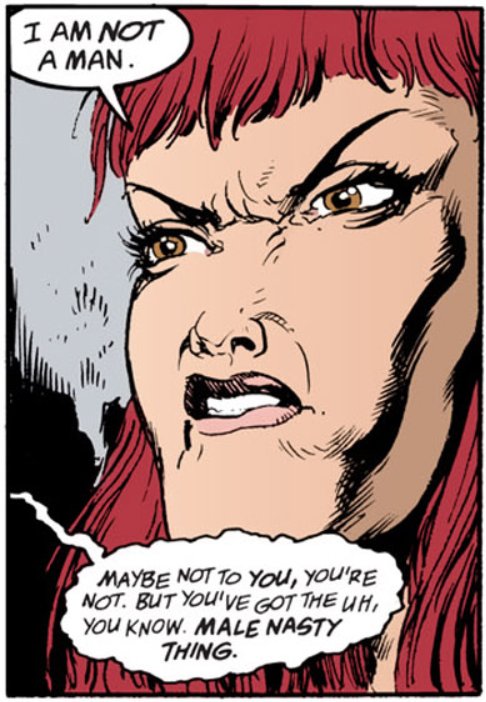
Consider this panel sequence offered as evidence that “A Game Of You” is “TERFy”. The redhead is Wanda, a trans woman. Since The Sandman is a lot of things, including both fantasy and horror, she is talking to a human face nailed to a wall named George, who was enchanted by a mostly-villainous witch who at that point has departed on a magical journey enabled by goddesses and the Moon.


Wanda: 
“That so? Okay, George, why’d they leave ME behind to look after Barbie?”

George:
“That’s uh pretty easy. It’s because you’re a MAN. That stuff they did with the uh Moon. That was a women thing.”

Wanda:
“I am NOT a man.”
  
George:
“maybe not to YOU you’re not. but you’ve got the uh, you know. male nasty thing.”

Wanda:
“LISTEN: I’ve had electrolysis. I’m taking hormones. All that’s left is a little lump of flesh; but all that doesn’t matter ... INSIDE I’m a woman.”
  
George:
“SHE doesn’t think so.”

George’s voice bubble appears over the Moon seen through a window: 

“and to be honest uh well even if you had uh had the operation it still wouldn’t to the Moon. it’s chromosomes as much as uh anything”

Kevin Riggle says of this:

I feel like a lot of the tension come from folks wanting Gaiman’s universe to be just — and I’ll be honest, the goddesses’ rejection of Wanda struck me to the core. But his universe, much like our own, isn’t inherently just, and the goddesses aren’t avatars of justice within it

Which is something folks struggle with mightily in modern works from trans and queer creators too

And it’s always dispiriting to watch our communities reenact the traumas we’ve experienced on younger creators, over and over and over again

Gaiman, commenting on that sequence, says much the same thing:

Yes, there were transphobic and TERFy characters in “A Game of You”. And there were other characters too, with very different opinions on the matter. With respect, I'm not sure you understand how literature works.

Is this just rationalizing in retrospect? Sunny Moraine reflects on the book in context.

In talking about something like “A Game of You” it is absolutely critical that we be able to recognize how in some ways it fails by today’s standards while also recognizing that for many older trans folks it was powerfully and overwhelmingly affirming. Stories like “A Game of You” help produce the better world in which “A Game of You” hasn’t aged altogether well.

I’m glad parts of it don’t look so great now. It makes me appreciate it more.

Representation doesn’t have to be perfect to be meaningful.

REPRESENTATION DOESN’T HAVE TO BE PERFECT TO BE MEANINGFUL.

“A Game of You”’s open and explicit stance is that trans women are women. Doesn’t mean the imperfections aren’t there but I’m sorry, in 1993 that’s fucking huge.

Among the problems “A Game Of You” has to the contemporary eye is how Wanda does not survive the story, which plays into a bad Bury Your Gays trope. Her death does do a lot of thematic work, though. Wanda’s death is not the end of her story; Barbie attends Wanda’s funeral, where she is rightly disgusted at how Wanda’s family dishonor her her by denying who she was — ending on Barbie countering the way they deadnamed her, which many defenders of the story have shared on social media.


A series of comics panels. Barbie, in mourning black, sits at a gravestone.
  
“Oh yeah, and here.” She produces a lipstick. “I thought you’d like it. It’s TACKY FLAMINGO or whatever it’s called. Your favorite color.”

In a big panel, we see that she has used the lipstick to cross out the name ‘Alvin’ to replace it with ‘Wanda’.
  
“Hey, no problem. LEAST I could do.”

This vindication does not make it okay to repeat the trope, but I know how moving I found that page when, little acquainted with trans people, I read it thirty years ago. Other things stand up better. Wanda is on stage for a few chapters before the story bothers to mention that she is trans. And most of all to me, just a couple of pages after the page above another sequence, in which we get this:

Wanda, smiling, is with a pale goth girl with an ankh necklace. A caption of Barbie describing a dream vision reads: Wanda’s with this woman I don’t know. And the woman goes up on tippie-toe and whispers something into Wanda’s ear.
Then Wanda turns around and she seems to see me, and she waves. They both wave.

Moraine says of that:

And again, whatever the TERFy fucking goddesses say, Neil is very very clear in these panels whose side he’s on.

To emphasize the point: The Sandman is a fantasy epic which spans nearly all of time and space and that goth girl is a cosmic entity offered to us elsewhere in the book as literally the most wise being in the Universe. The Sandman says that if the Moon thinks you are a boy when you know you are a girl, the damm Moon is wrong. Fīat jūstitia ruat cælum.

The nightling argues that this justifies Wanda’s death as a storytelling move in a heartfelt commentary.

And there are tropes like “women in refrigerators” (which means a love interest- usually female- death is used to motivate a hero) or “bury your gays” (where it seems only the gay character is killed off). But there is one LGBT+ character death where I’m very glad the character died. And it’s a character I actually like.
[⋯]
Wanda’s death was important because it was the first time in a comic you saw a Trans woman’s soul as a woman— revealing that she is a woman where it matters most. Her death was the easiest way to show this.

It is a victory that many young queer people find The Sandman unreadable because they cannot imagine the world it was published into, a world in which it was a thunderclap of rich and vigorous queer representation. We honor a work like The Sandman by criticizing it, because that says it meets the standard which creators need to meet when representing people significantly different from themselves: to do something good enough to be worth criticism.

We honor those works further by moving past them. As we have done, and I hope we do further. But I hope not completely just yet. Because it has been obvious from when the Netflix streaming adaptation of The Sandman was first announced that one of Gaiman’s key motivations has been getting another bite at the apple of “A Game Of You” with the involvement of trans creators.

Via Felix Marques, I have a bushel of quotes from Gaiman about that.

Talking to N. K. Jemisen:

Things have changed. And because now there are lots of fantastic trans people making comics and telling their own stories. And I no longer would go, “hang on, I have trans friends. I am not seeing people like my trans friends in the comics that I am reading. So I am going to put people like my friends in my comics, because that’s reflecting my world.” By the way, if you are a 15-year-old boy in Middle America reading my comic, I want you to meet people that you aren’t otherwise going to meet.

NKJ: Or meet people who you may be yourself and haven’t figured out.

What’s weird for me is that hadn’t occurred to me when I was writing it. Maybe just because I was stupid or naive or whatever, but it didn’t occur to me. All I was going was, “I love Wanda. I will write Wanda. She will be like my friend Rachel. She will be like my friend Rose. She will be like all of the friends of Rose’s that she’s introduced me to.” What made me feel like I had done the right thing was the letters. Back then people wrote actual letters to the editor, and they would reach me a few months after they had done the letter column, in a big FedEx box with 100 letters.

Oh god, a hundred at a time?

Oh yeah. And I’d read them, because that was the only feedback. There was no internet. There was no way of knowing that what you were doing was doing anything. And I remember the first Game of You that came out, people going, “This is weird. Why do you have this person in our comic? We don’t like him/her. We are offended. We are threatened.”

And then six issues later, the same people are writing, “Oh fuck, I can’t believe they buried Wanda in a suit. They didn’t put her name on the thing. How could they do that to her.” And at that point I’m going, “Good.”

More:

I’m not sure that I’d even try to tell that story now. There are a lot of trans writers, writing better comics about trans characters than I ever could. But the things that upset me then (eg misgendering in death) still upset me.

More:

Some trans people love Wanda and some don’t. I think the important thing will be having trans writers in the writers room when we get to “A Game of You”.

More:

My biggest request to the Sandman showrunner for when we get to the season with “Game of You” in it is that we have trans men and trans women in the writers’ room. Not as consultants, but as writers.

Update

We now have persuasive allegations that Gaiman is a monstrous abuser, which may or may not have something to do with the Netflix streaming adaptation getting cut short.

The “Game Of You” storyline with Wanda was omitted from the Netflix series, with Wanda getting only a fleeting, disappointing appearance. Far from the most important heartbreak, but heartbreaking all the same.

21 November 2022

Magneto

I love Tarkovsky and Kurosawa and Bergman and all that film nerd shit but honestly this scene from X-Men: First Class is my favorite scene in any film I have ever seen. I have watched it a hundred times and I will watch it a hundred more. There should have been ten movies of this:


That said, while I am too Jewish to ever get enough of Erik knifing Nazis with magnetokenesis, we have been blessed with quite a bit of that Magneto on film, so if I were Kevin Feige, I would have the Marvel Cinematic Universe give us a Tutsi Magneto who has some strong feelings about that other Erik.

10 November 2022

Superman’s hair

Over on Twitter, this still of Henry Cavill looking handsome and dashing in curly hair for a new film inspired me to unleash a Superman Hair Rant which I had been biting back for some time.

As Superman in Zach Snyder’s films, his hair bothers me. They considered doing it right but then decided on this.

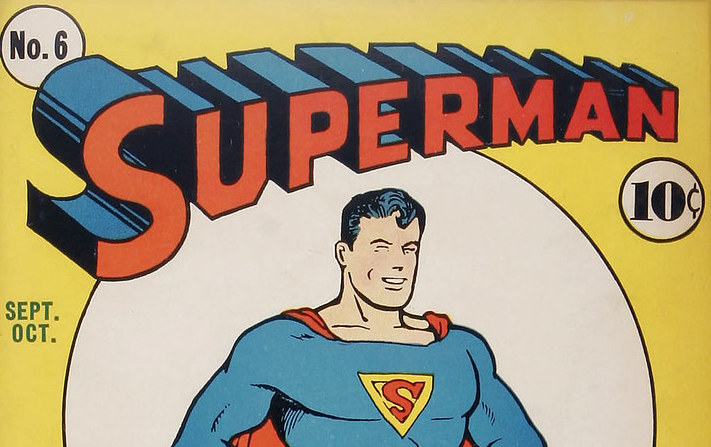
Superman’s curly forelock was a component of his character design from the very beginning, before creator Joe Shuster settled on how to draw the S.

It has been part of his look for decades. It is an integral part of his costume — which for a superhero makes it part of his identity.

When Frank Miller sweated down Superman to his absolute minimum iconic fundamentals, he emphasized the forelock.

Without it, he is not Superman. Slicking down his hair is part of his disguise as Clark Kent.

Aside from this being some fun superhero nerd-ing, Superman’s hair matters for another reason: Superman is Jewish. Check out the Ashkenazi Jewish teenagers who created him in the 1930s.

They invented Superman as an immigrant who escaped the destruction of his people by his doomed parents sending him across a vast gulf to America. He moved to the big city, abandoning his Hebrew name “Kal-El” to use the WASPy name “Clark Kent”. Nobody knows who he really is. And they gave him the same dark, curly hair they had … and to keep his secret, they had him slick it back, often hiding it under a fedora.

Roy Schwartz’ book Is Superman Circumcised?: The Complete Jewish History of the World’s Greatest Hero tells us:

They based their hero’s origin story on Moses, his strength on Samson, his mission on the golem, and his nebbish secret identity on themselves. They made him a refugee fleeing catastrophe on the eve of World War II and sent him to tear Nazi tanks apart nearly two years before the US joined the war. In the following decades, Superman’s mostly Jewish writers, artists, and editors continued to borrow Jewish motifs for their stories, basing Krypton’s past on Genesis and Exodus, its society on Jewish culture, the trial of Lex Luthor on Adolf Eichmann’s, and a future holiday celebrating Superman on Passover.

Oh, and he defeated the Ku Klux Klan. Not in a story. For real.

It is worth noting that Superman starts as a second-generation immigrant fantasy. Fully assimilated and a hero to the world he inhabits not in spite of what he inherits from the old country but for expressing it fully. In the Silver Age, Superman engages more fully with his Kryptonian heritage than Siegel & Shuster’s Golden Age Superman could because he is a step further removed from their assimilation anxieties.

My friend Tori says:

Watching Superman become a muscular Jesus is so painful. I have not been able to watch the Superman movies with any joy at all. I guess I liked him better as a comic or as a 60s TV star. Most of the films raise the stakes too high, without any social consideration at all. I know I say this a lot, but Superman was like my grandparents’ generation — enamored with the American dream, thankful for a home, and unable to ever return to where they were born because their birthplace was lethal.

Max Landis is a creep but he is smart about Superman and he said this well:

The question of Superman can never be “am I special, how special am I, am I worthy.” Those are Batman questions, because Batman wants to control. Superman doesn’t want to control, he just wants to help. He can’t be the chosen one; the “last of an alien race” thing is most interesting when it’s incidental.

To me the question always has to be “am I loved? am I giving love? Am I doing the most with the tools I’ve been given?” He’s not the messiah, and him not being the messiah is the heart of the character. He has to be just some normal alien, he shouldn’t be alien royalty, all that dilutes it.

Because it’s an immigrant story. It’s about being true to yourself, making that work, and then carrying that truth and love to be truthful and loving to everyone else. Superman is Clark doing his best.

Little Light on Twitter has a good meditation on Superman as an immigrant:

Honestly I’d love a story where the folks at the Daily Planet reveal they knew Clark Kent was being squirrelly about his ID but they checked his legal records, assumed he was just an undocumented immigrant from elsewhere on Earth, and respected / protected his privacy and safety. They’re all investigative journalists or whatever. Maybe they knew Clark was being evasive and facts weren’t adding up and he didn’t need those glasses but figured it was just to hide from La Migra and chose not to look into it further. Mystery solved. He’s a decent guy, lay off.

In the modern era of the Internet and all, it makes way more sense. And it establishes them as both competent and kind. “You think he’s Superman? Shoot, no, step into Perry’s office for a minute, keep your voice down, we can explain. We checked up on all of this a while ago.”

Why doesn’t he ever do the employee physical? Why is he always running off to take care of vague stuff without good explanations? Why does he claim to be from “Smallville,” which is obviously made up, and never mentions any relative but his parents, who don’t look like him? Whenever there’s the kind of crisis where the police would show up, Clark’s nowhere to be found. He never goes to the doctor. He’s so shy. He works so hard and never really has anyone over to his place. And we all choose to leave it at that, because we care about him.

What does a quiet, hardworking, hyper-polite guy who knows a lot about farm work look like to you? A guy who pays a lot of attention to when sirens go off? Who has secrets, but who never seems to do anything unethical or wrong, who is an exaggeratedly model citizen? Just saying.

Maybe Clark doesn’t even know this is why his secret identity has been working this well, because nobody wants to freak him out, until a Dreamer intern or something gives him a friendly “Your secret’s safe with me, brother, we’ve got to look after each other” at the copy machine.

And then you get a story of Clark finding community and kinship and solidarity with all the human beings whose parents also sent them, with desperate hope, from catastrophe-wracked homes to somewhere there might be a better life, who understand him better than maybe anyone else.

James Gunn update

At the time I add this, we only have teaser marketing for the 2025 Superman film, but already we are seeing that writer / director James Gunn has made some unmistakably deliberate choices about the hair.


David Corenswet as Clark Kent, with a mop of curly hair

  
Superman looking haggard and sad, with a curl on his forehead

Not what I woulda done. But I think it shows that they thought about it, such that I suspect that it will turn out to be better than what I woulda done.

I’m putting down a marker on Gunn’s & Corenswet’s take: Clark is the guy, Superman is the disguise, or more precisely, Superman is Clark’s challenge to himself of who and what he wants to be.

25 September 2020

An invitation to the Marvel movies (and streaming series)

A friend who is an astute watcher of popculture recently confessed to me that they have been intrigued by the phenomenon of the Marvel Studios films, but had not yet sat down to see them. This is a viewing order for the films of the Marvel Cinematic Universe fun for fans but designed for someone coming in cold like my friend — only glancingly familiar with either the movies or the comics they are based on — who is ready to commit to watching most or all of the films. Inspired by the “Machete Order” for watching the two Lucas trilogies of Star Wars — which treats Episode II & III as an extended flashback between V and VI, omitting Episode I entirely — this viewing order is different both from the order in which the films were released and from the chronological order of the events in the world of the films.

Marvel Studios and the fictive “Marvel Cinematic Universe” are interesting and unique for a number of reasons. There have been movie series with multiple sequels before, and superhero movies before, but the MCU is the first to capture the distinctly entangled series quality of superhero comics which fans love. Alan Moore, in his introduction to a collection of comics published in 1987, describes it better than I could:

There are great economic advantages in being able to prop up an ailing, poor-selling comic book with an appearance by a successful guest star. Consequently, all the comic book stories produced by any given publisher are likely to take place in the same imaginary universe. This includes the brightly colored costumed adventurers populating their super-hero titles the shambling monstrosities that dominate thier horror titles, and the odd girzzled cowpoke who’s wandered in from a western title through a convenient time warp. For those more familiar with conventional literature, try to imagine Dr. Frankenstein kidnapping one of the protagonists of Little Women for his medical experiments, only to find himself to the scrutiny of a team-up between Sherlock Holmes and Hercule Poirot. I’m sure that the both the charms and the overwhelming absurdities of this approach will become immediately apparent, and so it is in comic books
[⋯]
The continuity-expert’s nightmare of a thousand different super-powered characters co-existing in the same continuum can, with the application of a sensitive and sympathetic eye, become a rich and fertile mythic background with fascinating archetypal characters hanging around, waiting to be picked like grapes on the vine. Yes, of course, the whole idea is utterly inane, but to let its predictable inanities blind you to its truly fabulous and breathtaking aspects is to do both oneself and the genre a disservice.

This viewing guide is intended to highlight this quality of superhero stories, the sense that different adventures of different characters made by different creators fit into a sprawling world of wonders and adventure, delivering a story of its developing world across the whole series.

How to use this list

Marvel Studios’ movies famously include one or two post-credits bonus scenes. Many of them are in-jokes for comics nerds or teasers for later movies which may be screwed up by this watch order, so I encourage skipping most of them. I have marked movies with an asterisk when you do want to check out the post-credits bit.

For convenience, this post starts with just the list of movies, then repeats itself with notes on each of the movies & series.

In order to highlight the building narrative, the list is sequenced such that it leaves a lot of the best stuff for late in the series. If your patience runs short, skip ahead to Section B to taste the very best before dropping out. There are also ways to abbreviate the viewing binge less radically …

  • Within each section, things are numbered only if the viewing order is important. In other cases, I just provide a list, starting with the ones I recommend most highly.
  • Sections with Roman numerals deliver the initial long-sweep story across multiple films in a deliberate order. If you want to focus on that experience, run just through these and skip the lettered sections.
  • Sections marked A, B, and S deliver bonus Marvel Studios movies which are not integral to the long-sweep story.
  • Sections marked Σ & Χ deliver movies about Marvel characters which were not made by Marvel Studios. They make an interesting contrast which informs what the Marvel Studios movies are doing.

Overview

I — Introducing the Marvel Universe

  1. Iron Man
  2. Captain Marvel
  3. Thor
  4. The Avengers

II — The Ballad Of Steve Rogers

  1. Captain America: The First Avenger
  2. Captain America: The Winter Soldier

III — The Ballad Of Tony Stark

  1. Iron Man 2
  2. Iron Man 3

IV — The Problem Child

  • Avengers: Age Of Ultron

A — Bonus stories

  • Guardians of the Galaxy vol 1
  • Shang-Chi and the Legend of the Ten Rings
  • Ant-Man
  • Doctor Strange
  • Thor: The Dark World
  • The Incredible Hulk

V — Civil War

  1. Captain America: Civil War
  2. Black Widow

B — Marvel’s best

  • Thor: Ragnarok
  • Guardians of the Galaxy vol 2
  • Black Panther

VI — Infinity

  1. Avengers: Infinity War
  2. Ant-Man & The Wasp
  3. Avengers: Endgame

S — Spider-Man

  1. Spider-Man: Homecoming
  2. Spider-Man: Away From Home
  3. Spider-Man: No Way Home

Σ — Alternate Spiders

  • Spider-Man &
    Spider-Man 2
  • Into The Spider-Verse &
    Across The Spider-Verse

X — X-Men

  1. X-Men: First Class
  2. X-Men
  3. X-2: X-Men United
  4. X-Men: Days Of Future Past
  5. Logan
  6. Deadpool &
    Deadpool 2
  7. Deadpool & Wolverine

VII — After the endgame

  • WandaVision
  • The Marvels
  • Jessica Jones
  • Guardians of the Galaxy vol 3
  • Agatha All Along
  • Ms. Marvel
  • Loki
  • Luke Cage
  • The Falcoln & The Winter Soldier
  • Wakanda Forever
  • She-Hulk
  • Hawkeye
  • Captain America: Brave New World
  • Thor: Love and Thunder
  • Doctor Strange and the Multiverse of Madness
  • The Eternals
  • Ant-Man: Quantumania &
    Secret Invasion &
    Iron Fist

More details

I — Introducing the Marvel Universe

A taste of the basic charms of these movies.
  1. Iron Man ★★★★☆ *
    The movie which initially put Marvel Studios on the map. When it was released, Marvel Studios’ first experiment with the Blade movies with Wesley Snipes had done well enough but had not really opened up Marvel’s comics sensibility … Robert Downey, Jr. was considered a has-been … not even comics fans were enthusiastic about Iron Man … and director Jon Favreau was a small-time cult actor / writer / director. But Favreau was a nerd who respected the material, so the movie just worked and was a hit. And the post-credits bonus — then a surprise from out of the blue — teased the series of films which Marvel Studios hoped to build. In this viewing order, we go from that little extra scene into a flashback …
  2. Captain Marvel ★★★☆☆
    Though this was released late in the series, it is a perfect demonstration of the basic charms of Marvel movies — action & spectacle, character melodrama, actors having fun hamming it up — plus it sets up a few things for an ordinary viewer which one had to be a comics fan to appreciate when encountering the films in release order.
  3. Thor ★★★☆☆ *
    Most film industry folks were puzzled when Marvel got Kenneth “Henry V” Branagh to direct a superhero movie. It was the right move, bringing the right note of shameless Shakespearean melodrama. The story is simple but then-unknowns Chris Hemsworth and Tom Hiddleston turn out to be awfully charming, and the supporting cast all have too much fun.
  4. The Avengers ★★★★☆ *
    With this film, the everything-and-the-kitchen-sink pleasures of the Marvel Universe unfold. Uber-nerd director Joss Whedon (not yet disgraced when this was made) made it work with his knack for character ensemble and deep love & understanding of genre tropes. Aliens! Mad science! Super-spies! Hammy pseudo-Shakespearean dialogue! Plus Mark Ruffalo delivers an acting miracle that powers a perfect narrative climax.
If you feel that these were fun but also have had enough, you could tap out here and count yourself as having given Marvel a try. But the best is still ahead, so consider sticking with it, or just leaping ahead to B — Marvel’s Best.

II — The Ballad Of Steve Rogers

One could binge the Marvel movies or chip away at this list at a leisurely pace, but these two are a matched set, playing off of each other in a way that demonstrates how superhero stories can exercise the same characters for very different kinds of stories. I recommend watching them in this order as a double feature, or at least within a week or two of each other.
  1. Captain America: The First Avenger ★★★★☆ *
    This origin story set in the Second World War was released before The Avengers, but I think it works better — especially for non-fans — as a flashback after the ensemble movie, which introduces Captain America well enough even if you don’t know anything about him. Marvel once again reached for a cult director with unique qualifications: Joe Johnston had directed the underappreciated, deliberately earnest, dieselpunk retro-pulpy The Rocketeer, and he reprises that voice for this WWII story about a character created in 1941. Chris Evans as our hero makes it look easy to play a character who is an unequivocal good guy, in contrast to most of the interestingly flawed Marvel heroes.
  2. Captain America: The Winter Soldier ★★★★★
    The first Marvel movie to really stretch what the setting and characters can do, this entry contrasts with its predecessor’s earnest tone by delivering as much a crackling 1970s paranoid political thriller as superhero spectacle. (One thing to notice, which this watch order undercuts, is how when it was originally released, we had experienced our heroes as a handful of exceptional individuals in a world otherwise much like our own; Winter Soldier made the Marvel world feel expansive, with weirdness hiding behind every door.)

III — The Ballad Of Tony Stark

  • Iron Man 2 ★★☆☆☆
    Frankly a mediocre entry in the series. It’s not bad, but it is disappointing, so I recommend skipping it unless you find yourself loving RDJ as Tony Stark … or you are someone who cannot get enough of Sam Rockwell goofing around.
  • Iron Man 3 ★★★★☆ *
    Writer / director Shane Black directed RDJ in the weird comedy-noir masterpiece Kiss Kiss Bang Bang back in 2005. Tapped by Marvel, he delivered a mix of big spectacle, twisty storytelling, and a character turn for Tony Stark which made RDJ work for a living, setting Tony up as interesting enough to serve as the backbone of the whole film series. It’s also worth noting that when Marvel announced that the villain would be The Mandarin — a character who is basically Comics Supervillain Fu Manchu — folks like me were Concerned about how badly racist that could go, but the movie subverted that problem more cleverly than they (or just about anyone) have managed again since.

IV — The Problem Child

This movie swings for the fences … and doesn’t really work. But it includes elements signficantly referenced in later films in the series, so while one can skip it, this is the one film in the series where I encourage you to ride out a weak film in service of enjoying the series as a whole. I recommend nibbling on it a few scenes at a time, which plays to its strengths and mitigates many of its weaknesses: watch a chunk of it when you have some idle time, or as an appetizer before watching a movie from Section A, to get to a point where you have have finished Ultron before digging in to Civil War.
  • Avengers: Age Of Ultron ★★☆☆☆
    Yeah, it’s a bad movie, but there are a lot of good bits rattling around in it: smarter engagement with the themes of Frankenstein in the age of artificial intelligence than most movies entirely about that, some delightful scenes of our heroes just hanging out together, a direct rebuke to the inhuman callousness of the nearly-fascist Superman film Man Of Steel which was released while this was in production, and a couple of crackerjack action sequences. But the worst bits are bad. The effects for the face of killer robot Ultron are a queasy Uncanny Valley failure, undercutting a superb voice performance by James Spader. And one scene is a horrendous misfire which has Natasha “Black Widow” Romanov saying something gobsmackingly stupid and sexist.

A — Bonus stories

You don’t need any of these to make sense out of the story arc explored in the sections with the Roman numerals, but most of them are pretty good, they show more of the range of things that superhero stories can do, and the more of them you catch the better the callbacks and character stuff from later movies will land.
  • Guardians of the Galaxy vol 1 ★★★★☆
    A showcase for Marvel movies’ capacity for exuberant fun speaking to our inner ten-year-old, threaded with surprisingly poignant notes. If Star Wars has broken your heart with disappointment, this picture may rekindle your enthusiasm for Wacky Adventures In Space. One can really watch this one at any point, since it takes place In Space, away from our other heroes; the characters don’t get folded in to the rest of the story until Infinity War.
  • Shang-Chi and the Legend of the Ten Rings ★★★★☆
    A demonstration of superhero sensibilities marrying well with other kinds of stories. If one has any love at all for xianxia or wuxia or kung fu movies, it reflects what Daniel Pinkwater said about Laurel & Hardy — one knows exactly what is coming but the delivery is so perfect that one cackles with delight when it arrives. (Oh, there’s a bunch of bamboo scaffolding on this building? I wonder what will happen!) It stands almost completely on its own, though there is an allusion to Doctor Strange which benefits a bit from having seen that first.
  • Ant-Man ★★★★☆
    Loose goofy fun, with Paul Rudd characteristically charming and funny, bursting with setpieces more about cleverly playing off of our hero’s superpowers than the special effects. I must note that this was my young neice’s favorite. It does not draw much on other Marvel movies, but one should catch it before seeing Civil War.
  • Doctor Strange ★★★☆☆
    The story is a little tepid and it does not get as much leverage as it should out of some of its actors, but it has a bunch of unique strengths. Our hero comes up with a very clever resolution at the ending, there are some dazzling unique visual setpieces which folks who found that Inception left a lot of opportunity for extravagant effects on the table will find refreshing. And not only does Strange play a big role in the Infinity movies, this movie sets up my single favorite callback in Endgame.
  • Thor: The Dark World ★★☆☆☆
    This movie isn’t quite bad but it is weak entry is worth watching if you find that you love Thor & Loki … and it does set up a couple of really terrific callbacks in later, better movies.
  • The Incredible Hulk ★★☆☆☆ *
    The first MCU film, though release timing had it come right after the original Iron Man; it turns out rough enough around the edges that they re-cast the Hulk’s alter ego Bruce Banner in the later films. But if you love the Hulk, Frankenstein, Ed Norton, or mad science you may find it interesting. (Don’t confuse this with the strange, gutsy, flawed Ang Lee film Hulk, which predates Marvel Studios!)

V — Civil War

  1. Captain America: Civil War ★★★☆☆
    This picture exercises how superhero comics have a lot in common with long-running melodramatic soap operas, portraying larger-than-life characters who live in a messy, complicated world. Plus it finally delivers the truly extravagent superhero action setpieces fans are accustomed to seeing on the comic page with a lot of superheroes onstage together. The story works a significantly better if you have seen Age Of Ultron, and there’s a fun payoff if you have seen Ant-Man movie is also a plus, but neither is strictly necessary.
  2. Black Widow ★★★☆☆
    This pretty-good spy thriller + family comedy-drama fits right after Civil War in the story sequence despite production problems which wound up deferring its release until much later. If you want to catch it, it benefits a little from watching it shortly after Civil War.

B — Marvel’s best

These three are generally understood to be the best Marvel Studios movies as movies. They benefit significantly from playing off of earlier movies in the sequence but are not necessary to feed the long story of the series.
  • Thor: Ragnarok ★★★★★
    Somehow this candy-colored delight is both the most fun and funny Marvel movie while also managing to deliver another meditation on colonialism and a resonant story about family, community, and responsibility.
  • Guardians of the Galaxy vol 2 ★★★★★
    A refinement of all the zany, vulgar charm of the previous entry, building to an ending with much more emotional resonance than one would expect. You don’t need to see vol 1 first to make sense of it, but it’s almost as good a movie so you probably want to.
  • Black Panther ★★★★★
    An allegory of colonialism and global racial injustice through the lens of US Black cultural dreams and sensibilities, which sounds like eating your spinach … but enlivened by superheroes and the exuberance of the Marvel sensibility, it is instead a fun and inspiring modern myth which became a pop culture phenomenon for good reason. If you only see one Marvel movie, this is the one. And it makes a good segue to the end of the story cycle ….

VI — Infinity

This wraps up the initial big ten-year story arc Marvel Studios built with their movies. Though fans’ and Marvel marketing’s use of the word “saga” is overly grandiose, there really is a payoff here from working on such a big canvas. In comics, every few years comics publishers do a “crossover” story which ties together almost everything they publish, touching the stories in each character's individual books and then climaxing in a story which contrives to include as many characters as possible to play a role. This is both a sleazy marketing gimmick and, when it works, the ultimate expression of a unique thing that the superhero storytelling can do with its vast cosmology, numerous genres, and hundreds of characters with interlocking stories. It is a miracle that this works at all, much less as well as it does.
  1. Avengers: Infinity War ★★★★☆ *
    Thanos, the space villain who has been knocking around the edges of the stories told so far, takes center stage in his quest for the Infinity Stone MacGuffins which have played a part in several of the movies. It is worth noting that structurally, Thanos is the protagonist of this movie.
  2. Ant-Man & The Wasp ★★★☆☆ *
    A sequel almost as much fun as the original, with even more clever play with the implicitions of our heroes’ weird superpowers, if you like that sort of thing. Not an important movie in the Big Story, so you could skip it if you didn’t take a shine to the first Ant-Man film, but it’s nice to get a smaller story as a break between the massive spectacles of the two big Avengers movies … and the post-credits scene establishes it as bridging Infinity War to Endgame in an interesting way.
  3. Avengers: Endgame ★★★★☆
    Most superhero stories begin and end with a stable status quo. This movie shows how the world and our characters were transformed by the events of Infinity War, reflects on where our characters came from, plays out what they do next, completes both The Ballad Of Tony Stark and The Ballad Of Steve Rogers, and makes a callback to Age Of Ultron so good that it makes watching that weak entry worthwhile.

S — Spider-Man

The three Marvel Studios Spider-Man movies are not strictly necessary to make sense of the big initial story arc, but are all good.
  1. Spider-Man: Homecoming ★★★☆☆
    Another example of bringing life to stale genres by stirring in superheroics, in this case the teen high school comedy-drama. Not great but solid, with good performances by the cast and a superb twist at a key moment. Properly speaking this takes place shortly after the events of Civil War, but it doesn’t really hurt anything to watch at a different point.
  2. Spider-Man: Away From Home ★★★☆☆ *
    More teen high school comedy-drama, not quite as strong as the first entry (and a few elements which disintegrate if one thinks too hard), but the lead characters are charming and the villain is interesting. Contains major spoilers for Infinity War, so best if you wait to watch this one after that.
  3. Spider-Man: No Way Home ★★★★☆
    The best Marvel Studios Spider-Man feature. Since it plays with ideas from Spider-Man movies which Marvel Studios did not make, so I encourage catching at least one of the two Sam Raimi / Tobey Macguire movies first ….

Σ — Alternate Spiders

For rights reasons, Sony Pictures has made three distinct series of Spider-Man movies unconnected by style or story from the Marvel Studios version of the character. (Four if you count the so-bad-they’re-good Venom movies.) Alas, the two Amazing Spider-Man movies with Andrew Garfield as Peter Parker feature a few technical virtues (Spider-Man moves beautifully in them) but are clumsy enough that I cannot recommend them. Sam Raimi’s Spider-Man 3 with Tobey Maguire’s Peter Parker is better than its reputation, but it too is disappointing enough to skip unless you fall in love with Peter Parker.

But these two pairs of movies are terrific:
  • Spider-Man ★★★★☆ &
    Spider-Man 2 ★★★★★
    Raimi’s first entry is super and the second one is even better, in the running for best superhero movies ever in the eyes of many comics fans. In contrast to the Marvel Studios movies, these commit deeply to the melodramatic storytelling style of the comics of the 1960s.
  • Into The Spider-Verse ★★★★★ &
    Across The Spider-Verse ★★★★☆
    The first is both one of the best superhero movies ever made and also one of the best animated features ever made: visually dazzling, bursting with love for superhero stories, and genuinely moving. The sequel is a hair short of that, but for honest reasons — it suffers the challenges of a second act in a three-act story, and sometimes groans under the weight of its ambitions — but that is praising it with faint damnation.

X — The X-Men

Before Marvel Studios began their MCU sequence, 20th Century Fox started a series of films about this team of Marvel superheroes and their antagonists. Half of the dozen-plus entries in the series are only suited to superhero nerds, which is frustrating because the X-Men are among of the best and most beloved things in Marvel comics. But there are a few that are good, one very good, and one true classic. Disney’s acquisiton of Fox means that these characters will get rebooted in Marvel Studios films to come, so if you want a taste of a different style of Marvel movie than Marvel Studios has made, these are worth a look.
  1. X-Men: First Class ★★★★☆
    The second-best X-Men film. It was made late in the series, but since it flashes back to the origins of the team in the 1960s, it is actually the ideal place to start, making its allegory of the Black, gay, and other liberatory social movements very direct. (I wrote a little review of it when it was new.)
  2. X-Men ★★★☆☆
    The first film made in the series. Seeing it now, in contrast to the matured Marvel Studios approach, it suffers painful failure to trust the material, but at the time it was new fans like me were excited that it was one of the best superhero movies yet made, with gravitas delivered by Ian McKellen & Patrick Stewart, a star-making turn by Hugh Jackman, clever superheroic setpieces, and effective queer allegory.
  3. X-2: X-Men United ★★★☆☆
    A follow-up that improves a bit on its predecessor, with more room for the performances to breathe.
  4. X-Men: Days Of Future Past ★★☆☆☆
    A flawed, fun mess which ties together the casts of the flashback and later versions of the team. If you’re losing patience with the X-Men, skip this one, but it has some virtues, including a couple of terrific superhero action setpieces if you like those. After you see it, search YouTube for “quicksilver sweet dreams” to enjoy a sequel to its most memorable bit, snipped out from the gawdawful movie in which it appears.
  5. Logan ★★★★★
    The last, and by far the best, film in this series. Not just a terrific superhero movie but a classic movie, period, re-framing the characters and world as a John Ford western. It benefits if one has seen the previous movies (especially X-2) but you don’t strictly need any of them.
  6. Deadpool &
    Deadpool 2 ★★★☆☆
    A pair of gonzo, vulgar, refuge-in-audacity action-comedies which somehow work much better than they have any right to. They technically belong to this series but have a completely different tone. Worth seeing as a taste of superhero comics sensibilities in their silly Brechtian self-parody mode.
  7. Deadpool & Wolverine ★★★★☆
    Going back to the well a third time really should not have worked, much less turned out the best of the series. Watch it after seeing Logan … ideally quite some time after, for reasons which will become apparent.

VII — After the endgame

With the conclusion of the big “Infinity Saga” arc, there are a growing set of feature films — plus an array of streaming TV series — informed by it. Covid, bad luck, and trying a few too many projects broke Marvel’s stride, undermining the consistency and the sense of an overarching story, but there is some good stuff worth catching. One can dig into most of these in any order after getting to the two Infinity films; I note the few cases where watch order makes a difference.
  • WandaVision ★★★★☆
    Possibly Marvel Studios’ most gutsy experiment with what one can do with superheroes on screen, and it works, playing with sitcom conventions to deliver both wit and pathos to deliver a cleverly accessible version of David Lynch’s surrealist voice.
  • The Marvels ★★★★☆
    Maybe I am a sucker, but I adore this trifle. It hits all of the formula elements deliciously, so shameless in its pursuit of fun that it lets Samuel L. Jackson bring his comedic side and has teen superhero Ms. Marvel get a phone call from her mom literally telling her, “you cannot have any more space adventures”. This comes after the events of WandaVision & Ms. Marvel, but you don’t need to see either of those first.
  • Jessica Jones ★★★★☆ / ★★★☆☆
    The first season is somehow both entertaining and a sophisticated meditation on narcissistic abuse. The later seasons don’t have quite the same depth but do deliver the crime-drama goods.
  • Werewolf By Night ★★★☆☆
    A shaggy love letter to old horror movies.
  • Guardians of the Galaxy vol 3 ★★★☆☆
    This third installment isn’t quite as strong as the previous ones, but it still delivers the mix-of-tones goods. CW: There’s a bit of animal cruelty which is earned by the story, but if you cannot watch that sort of thing at all, best to skip this movie.
  • Agatha All Along ★★★☆☆
    Shameless fun with witchy nonsense. If you like queer shenanigans — including Aubrey Plaza in her fully unhinged mode — it’s worth another ★. Spoilers for WandaVision, so catch that first.
  • Ms. Marvel ★★★☆☆
    A surprisingly sweet story hitting a lot of the notes which make Spider-Man an enduring character — a reflection on nerdy adolescence, family, and friendship.
  • Loki ★★★☆☆
    A witty, almost-nonsensical romp centered on Tom Hiddleston serving up thick slices of ham. Worth watching the entire thing just to get to a scene where Richard E. Grant miraculously blindsides you with melancholy tears.
  • Luke Cage ★★★☆☆
    The showrunner of this mostly-pretty-grounded story about Harlem’s local superhero says that he will never get tired of seeing a Black man in a hoodie shrug off gunfire. The show demonstrates why without it feeling like a downer.
  • The Falcon & The Winter Soldier ★★★☆☆
    A frustratingly uneven thriller. There is a lot of clever stuff in it, but after it opens a door to surprisingly interesting cultural politics, it disappoints by backing off from following through.
  • Wakanda Forever ★★★☆☆
    It may have been impossible to follow up the cultural moment around Black Panther even without the premature death of star Chadwick Boseman. Unable to fill those boots, this film is still solid — and also serves as a fitting requiem mass for Boseman.
  • She-Hulk ★★★☆☆
    A sitcom about being a lawyer who takes superhero / supervillain cases … while also being a superhero. Loose-unto-sloppy, but fun.
  • Hawkeye ★★★☆☆
    A fun trifle, part Holiday Comedy With A Hapless Dad, part Buddy Action Comedy.
  • Captain America: Brave New World ★★★☆☆
    A weaker attempt at the cocktail of superhero story and political thriller which Captain America: The Winter Soldier delivered, but entertaining enough, if only to see Harrison Ford having some hammy fun. This takes place after The Falcoln & The Winter Soldier and is a bit informed by it.
  • Thor: Love and Thunder ★★☆☆☆
    A surprisingly weak entry getting the band back together from the sublime Ragnarok. There is fun in there, but unsatisfying as a whole.
  • Doctor Strange and the Multiverse of Madness ★★☆☆☆
    A messy entry that has its charms if one has developed a taste for specifically-superheroic tropes or enjoys Sam Raimi’s overspiced directoral style.
  • The Eternals ★★☆☆☆
    This attempt at Big Cosmic Nonsense somehow doesn’t land right, but it has real ideas and is so gorgeously shot that it is an intriguingly noble failure. As with Age Of Ultron, I find it more gratifying a few scenes at a time.
  • Ant-Man: Quantumania &
    Secret Invasion &
    Iron Fist ★☆☆☆☆
    The baseline for the MCU is popcorn entertainments a little better & smarter than they need to be; the lesser works are more weak than bad, entertaining enough for a lazy Sunday afternoon. But these are real turkeys.